So today the Mobile World Congress officially opened in Barcelona and I fear that it's days are numbered as an event because the Circus that is the exhibition is now too big and the Conference of little relevance to the Mobile Network Operators who make up the GSMA. For many MWC15 started on Sunday with a number of handset makers holding Press Events to launch new devices.
The GSMA in an effort to raise funds has grown the exhibition event to a size that it is no longer controllable. Yet it has failed to attract the likes of Apple to attend either to exhibitor or talk at the conference. Every year the GSMA attempts to set the agenda and fails, it leaves me feeling disappointed and questions just what datapoints they select in an effort to predict the future. This year they are focusing on the Internet of Things which I have to ask just what does that have to do with Mobile Networks over the next 5 years?
Just before Telecoms World collapsed we saw Internet Firms descend on Switzerland spending $1M+ on stands getting all the attention rather than presentations on the Conference stage. I fear that we are witnessing the same with MWC. At the end of this week I am sure that the GSMA will announce ever more visitors attended, more press attended and the whole thing was a success. I think I will say that the event has become somewhat like a Conservative Party Conference all be it on a large scale. We took a trip to the seaside to walk around a massive soulless space and feel that we are close to the powerful only to discover that we have no influence let alone power to shape the future!
Showing posts with label Apple. Show all posts
Showing posts with label Apple. Show all posts
Monday, March 02, 2015


Monday, September 29, 2014
Will Apple's iWatch be your friend?
Have been thinking about wearables since GSMA World in Barcelona this February and with the launch of Apple's iWatch I have started to formalise my opinions.
Setting aside the questions of does the device look suitable to take a place on my wrist the biggest question is what does an iWatch offer that I don't get from my handset?
The majority of Optimists tell me that if offers the opportunity to open a wide range of health benefits thanks to the App developer ecosytem taking the lifeloging data and improving what I do day to day. I have looked at eHealth for quite some time and on the whole the processes that have been designed to make medicine better via technology have failed because of the silo nature of the stake holders. What has happened is that the increased data available has been used by the Insurance industry to raise premiums and or decline treatments.
Given what we have seen about breaches in data security by technology firms I do not hold out any hope that my data in anonymised given that the registration/purchasing functions used by Apple. Given that my working life requires long periods sat down and limited opportunities to exercise it would not be a surprise if the Actuary placed me in a high risk group and incentivised changes by financial penalties. Why should I make it easy for them by fitting a monitoring device that records how poor my time is used when it comes to health?
If I want to improve I think that I would invest in a Polar HRM system for the periods of the week when I am active and record the results in a Notebook rather than online rather than strap on an iWatch and give away health data.
Setting aside the questions of does the device look suitable to take a place on my wrist the biggest question is what does an iWatch offer that I don't get from my handset?
The majority of Optimists tell me that if offers the opportunity to open a wide range of health benefits thanks to the App developer ecosytem taking the lifeloging data and improving what I do day to day. I have looked at eHealth for quite some time and on the whole the processes that have been designed to make medicine better via technology have failed because of the silo nature of the stake holders. What has happened is that the increased data available has been used by the Insurance industry to raise premiums and or decline treatments.
Given what we have seen about breaches in data security by technology firms I do not hold out any hope that my data in anonymised given that the registration/purchasing functions used by Apple. Given that my working life requires long periods sat down and limited opportunities to exercise it would not be a surprise if the Actuary placed me in a high risk group and incentivised changes by financial penalties. Why should I make it easy for them by fitting a monitoring device that records how poor my time is used when it comes to health?
If I want to improve I think that I would invest in a Polar HRM system for the periods of the week when I am active and record the results in a Notebook rather than online rather than strap on an iWatch and give away health data.
Saturday, May 10, 2014
So where are we going in Mobile?
I look at the mobile ecosystem in Europe and fear that rather than making progress it is regressing, people are not innovating rather they are controlling costs in order to offer some kind of financial return for the shareholders.
Back in 2008 the former Strategy Director of Orange and I were telling everyone that if the Mobile Networks were to have a future as well as building out networks they needed to invest in improving Voice services or they would end up hollowing out the core business. Well I guess they were not listening. My own family fear making telephone calls on the basis that they are too expensive regardless of the fact that I have told them that the tariff they are on means that they have unlimited to calls to fixed and mobile numbers in the UK. Asked to say how much a call costs they appear like a Government Politician asked the price of a pint of milk and a loaf of bread.
Meeting with others involved in Futurology and they have moved on from evangelising Apps to now push the rise of Wearables/Internet of Things/Big Data. I am reminded of the Early Days of Imagineering at Orange where they worked with Charles Church and Microsoft to build a House of the Future in Commuter Belt Hertfordshire. People were asked to come and live in the house and then observed in an effort to understand what was possible and what was not. The biggest issue I have with the Automation of the House is just how do we propose to install the technology into the millions of houses that we have already built because at 150-200K new homes a year it's going to take a very long time before the market is of significant scale without such. I look outside my window at home and less than one in fifty houses where I live have a solar panel despite financial incentives. I know that I am due another round of renovations as it has been nearly ten years since I replaced the bathrooms and lighting. But I don't think that many others would say right now is the time to invest in enabling my house to be run by the Internet.
If I were to make the investment in enabling my house to be part of the next wave of technology what guarantee do I have that I have invested in the VHS solution rather than Betamax? Worse still will my investment be that of MiniDisk proportions and in a few short months the novelty of the new has faded and I no longer wish to use Nest to control my heating system or who ever supplies my lighting system. Worse still now will my connect fridge work if I persist in shopping at the Farmers Market rather than Whole Food Market? My artisan Butcher, Baker, Brewer and Cheese maker will not sully their products with smart tags and life is too short for me to inventory everything that comes into the house.
The fate of Nike's Fuel Band is something we can expect to see with Google's Glass and an number of current trendy fitness bands. Am I going to have another shoe box of tech junk that will only be fit for my own personal technology museum because they were once mass market and are now obsolete?
Perhaps now is the moment for the Mobile Networks to take greater control of there assets and whilst installing 4G technologies also adapt the API's that are used by Internet Firms to enable Apps and Internet of Things? In doing so they can once again price the value of connectivity this time using terms such as Quality of Service, Security and Enhanced Bandwidth to get extra payment above that of basic utility prices.
We are at the very early stages of 4G in Europe, it will be another 2-3 years before the service is deployed to cover the majority of the Landmass in most countries and then the speeds available will slowly be increased and new services/businesses will come to the fore. I do not expect that the companies that will dominate 4G are know yet just as Apple, Android and Apps were not on the tip of everyones tongue in 2003.
Back in 2008 the former Strategy Director of Orange and I were telling everyone that if the Mobile Networks were to have a future as well as building out networks they needed to invest in improving Voice services or they would end up hollowing out the core business. Well I guess they were not listening. My own family fear making telephone calls on the basis that they are too expensive regardless of the fact that I have told them that the tariff they are on means that they have unlimited to calls to fixed and mobile numbers in the UK. Asked to say how much a call costs they appear like a Government Politician asked the price of a pint of milk and a loaf of bread.
Meeting with others involved in Futurology and they have moved on from evangelising Apps to now push the rise of Wearables/Internet of Things/Big Data. I am reminded of the Early Days of Imagineering at Orange where they worked with Charles Church and Microsoft to build a House of the Future in Commuter Belt Hertfordshire. People were asked to come and live in the house and then observed in an effort to understand what was possible and what was not. The biggest issue I have with the Automation of the House is just how do we propose to install the technology into the millions of houses that we have already built because at 150-200K new homes a year it's going to take a very long time before the market is of significant scale without such. I look outside my window at home and less than one in fifty houses where I live have a solar panel despite financial incentives. I know that I am due another round of renovations as it has been nearly ten years since I replaced the bathrooms and lighting. But I don't think that many others would say right now is the time to invest in enabling my house to be run by the Internet.
If I were to make the investment in enabling my house to be part of the next wave of technology what guarantee do I have that I have invested in the VHS solution rather than Betamax? Worse still will my investment be that of MiniDisk proportions and in a few short months the novelty of the new has faded and I no longer wish to use Nest to control my heating system or who ever supplies my lighting system. Worse still now will my connect fridge work if I persist in shopping at the Farmers Market rather than Whole Food Market? My artisan Butcher, Baker, Brewer and Cheese maker will not sully their products with smart tags and life is too short for me to inventory everything that comes into the house.
The fate of Nike's Fuel Band is something we can expect to see with Google's Glass and an number of current trendy fitness bands. Am I going to have another shoe box of tech junk that will only be fit for my own personal technology museum because they were once mass market and are now obsolete?
Perhaps now is the moment for the Mobile Networks to take greater control of there assets and whilst installing 4G technologies also adapt the API's that are used by Internet Firms to enable Apps and Internet of Things? In doing so they can once again price the value of connectivity this time using terms such as Quality of Service, Security and Enhanced Bandwidth to get extra payment above that of basic utility prices.
We are at the very early stages of 4G in Europe, it will be another 2-3 years before the service is deployed to cover the majority of the Landmass in most countries and then the speeds available will slowly be increased and new services/businesses will come to the fore. I do not expect that the companies that will dominate 4G are know yet just as Apple, Android and Apps were not on the tip of everyones tongue in 2003.
Friday, November 15, 2013
It's not about the technology....
A friend on Twitter pointed me at this article on how Blackberry could have avoided becoming a footnote in business study classes looking at the Kodak Moment.
I am surprised that someone who works for an Advertising Agency fails to point to the obvious factors in Apples success. When none of the others were directly advertising to the consumer on TV, Apple were. When few were advertising handsets in the Press Apple did. Others at that time had stopped advertising above the line because they were selling products via Partners those partners were the Mobile Operators who used the coop funds to pay for in store and brochures which lets face it looks old and out of date compared to Apple.
NOTHING on a iPhone was new to the mobile industry what was fresh was the promotion and development of the aspirational quality of the handset. It has been helped by the "exclusivity" model used by Apple to "limit" mass market appeal. This fashion label allowed Apple for a time to lead the Smartphone market but was quickly overtaken in terms of volume by Samsung who used it's Far East cooperation ethos to appeal to those that where anti-Apple to grab the market.
The big question is will my Grandchildren read that Apple was just another Levis Strauss in that it helped establish a sector, almost died, had a return to fashion and then a slow but inevitable decline?
I am surprised that someone who works for an Advertising Agency fails to point to the obvious factors in Apples success. When none of the others were directly advertising to the consumer on TV, Apple were. When few were advertising handsets in the Press Apple did. Others at that time had stopped advertising above the line because they were selling products via Partners those partners were the Mobile Operators who used the coop funds to pay for in store and brochures which lets face it looks old and out of date compared to Apple.
NOTHING on a iPhone was new to the mobile industry what was fresh was the promotion and development of the aspirational quality of the handset. It has been helped by the "exclusivity" model used by Apple to "limit" mass market appeal. This fashion label allowed Apple for a time to lead the Smartphone market but was quickly overtaken in terms of volume by Samsung who used it's Far East cooperation ethos to appeal to those that where anti-Apple to grab the market.
The big question is will my Grandchildren read that Apple was just another Levis Strauss in that it helped establish a sector, almost died, had a return to fashion and then a slow but inevitable decline?
Tuesday, October 01, 2013
So will we be wearing our next mobile phone?
The excitement over the summer has been about wearables when it comes to mobile technology. Will our next device be in the form of smartglasses or smartwatches or even a smartsuit?
To be honest having got into some of the futurology that saw mobile phones becoming just a piece of jewellery in the form of a single earring I have a bad track record. I thought that we would be living in smart houses that sensed everything that went on and the handset would become the ultimate remote controller. I saw the mobile network morphing into a service provider that would be trusted to hold and manage all your personal data. To be honest these were forecasts back in 20th century and Google and Facebook had not become the cornerstones of many lives and we did not thing the NSA would read all our data. The Mobile Network was going to become everyones personal assistant and we would all have exemplary concierge levels of service.
What I do think that is that we will not live with a single connected device rather we will have a number of devices which will have a personal network connection to a modem that offers highspeed broadband and voice services. Some people who are happy with "popular" music can live with Spotify and YouTube whilst others will want a music device that plays back their musical collection. The same can be said for e-reader, camera, media consumption screen. Some are happy to map their run using an app on a phone whilst others have a more detailed record tanks to a Garmin Watch, in future the Watch will connect to the web via your personal modem.
As Augmented Reality develops we might expect the specialist glasses to become contact lenses or a protection device as seen with fighter pilots head up displays.
As healthcare gets involved we could start to see a number of devices that are warn to sense vital signs and mobility. We can expect to these developed for the Defence and Old Aged markets before they become mainstream. We might also be able to see tags used to enable smart seats, beds or toilets in connecting them to a mobile device and using proximity it will allow differentiation of different people within a building. These devices are likely to be manufactured thanks to 3D printing development rather than Samsung/Apple/Google design labs and Chinese factories.
The big issue will be that the deployment of smart buildings and thus smart cities is going to be the ability to get political buy in and consumer uptake. Very many of the senior executives I meet alongside senior politicians and very rich individuals do not carry a phone and have no wish to do so. Thus in areas of New York, Switzerland, London, Paris and Berlin now can to build the infrastructure needed to mesh new services together?
I think that we will see a number of prototypes come to market when it comes to wearables most of which will fail because we would be embarrassed to wear them and be seen as some form of cyborg. If the wearables could be made to look like "normal" products then fear that you are being "stalked" would force social pressure to stop use. Would you want someone with a wearable to share the changing facilities with you at your gym?
My advice to Mobile Networks invest in building the fastest best quality network, develop tools to manage ID, offer storage and form federations to innovate service fail to that and expect to fall.
To be honest having got into some of the futurology that saw mobile phones becoming just a piece of jewellery in the form of a single earring I have a bad track record. I thought that we would be living in smart houses that sensed everything that went on and the handset would become the ultimate remote controller. I saw the mobile network morphing into a service provider that would be trusted to hold and manage all your personal data. To be honest these were forecasts back in 20th century and Google and Facebook had not become the cornerstones of many lives and we did not thing the NSA would read all our data. The Mobile Network was going to become everyones personal assistant and we would all have exemplary concierge levels of service.
What I do think that is that we will not live with a single connected device rather we will have a number of devices which will have a personal network connection to a modem that offers highspeed broadband and voice services. Some people who are happy with "popular" music can live with Spotify and YouTube whilst others will want a music device that plays back their musical collection. The same can be said for e-reader, camera, media consumption screen. Some are happy to map their run using an app on a phone whilst others have a more detailed record tanks to a Garmin Watch, in future the Watch will connect to the web via your personal modem.
As Augmented Reality develops we might expect the specialist glasses to become contact lenses or a protection device as seen with fighter pilots head up displays.
As healthcare gets involved we could start to see a number of devices that are warn to sense vital signs and mobility. We can expect to these developed for the Defence and Old Aged markets before they become mainstream. We might also be able to see tags used to enable smart seats, beds or toilets in connecting them to a mobile device and using proximity it will allow differentiation of different people within a building. These devices are likely to be manufactured thanks to 3D printing development rather than Samsung/Apple/Google design labs and Chinese factories.
The big issue will be that the deployment of smart buildings and thus smart cities is going to be the ability to get political buy in and consumer uptake. Very many of the senior executives I meet alongside senior politicians and very rich individuals do not carry a phone and have no wish to do so. Thus in areas of New York, Switzerland, London, Paris and Berlin now can to build the infrastructure needed to mesh new services together?
I think that we will see a number of prototypes come to market when it comes to wearables most of which will fail because we would be embarrassed to wear them and be seen as some form of cyborg. If the wearables could be made to look like "normal" products then fear that you are being "stalked" would force social pressure to stop use. Would you want someone with a wearable to share the changing facilities with you at your gym?
My advice to Mobile Networks invest in building the fastest best quality network, develop tools to manage ID, offer storage and form federations to innovate service fail to that and expect to fall.
Sunday, September 29, 2013
Some thoughts about the recent developments in the handset space
Well the summer has been an eventful one for Handset Manufacturers. We have had the expected refresh of the benchmark for smartphone from Apple and whilst they have managed to break sales records thanks to clever marketing and management of supply they didn't in my opinion retake leadership of the sector. Samsung continues to drive ahead with the expansion of the Galaxy brand thanks to a refresh of the Note and the introduction of a wristwatch form factor as remote control/2nd Screen. The car crashes have been spectacular with Nokia exiting the market via a fire sale to Microsoft quickly bettered by the offer for BlackBerry by Fairfax. Have not started analysis of the performance of HTC, LG, Sony who seem to have become casualties in the OS wars of recent years not server enough to kill them but bad enough to make them marginal players.
On the Apple front I was pleased to see just like others in the fashion industry they have given up trying to make size zero yet slimmer. I just hope that they and others will take note of the reviews of the two new iPhones side by side that report the 5c feels better in the hand and start adding curves. But please don't go over the top with a Kim Kardashian inspired monster, if that were to happen it would be on a par with the Pink Motorola V3 razr and signal that innovation had died and marketing was going to kill the business. On a negative front the changes seen with iO7 seem to be cosmetic rather than a genuine shift that takes into account that a 4G handset is a very different device to one that spends most of its time on Wifi. Perhaps next year the designers will rock up with a new OS that moves the world forward rather than paint lipstick on a fading star?
Samsung is a company that always surprises me when ever I interface with it. It's old school centralised command and control structure and long term planning seems inflexible yet surprises in getting the market right. Unlike any of the other Handset Guys it still seems to value it's channel partners and has strong relationships with the mobile networks who after all will sell the majority of its handsets. Yet design by committee does seem to be throwing up some strange selections. The Mobile Phone business has spent twenty years telling people that don't need to wear a device on the wrist to tell the time and yet they come out and launch such a device. Looking at the functionality I would have hoped that they would have followed Polar and combined fitness applications alongside the ability to be a second screen for a tablet/phone.
What can I say about Nokia without sounding like Tomi Ahonen? I would point out that when Nokia overtook Motorola to become Number 1 in the world it did so working with the Network Operators and up until the arrival of Elop maintained strong links. The business was not in bad shape until it started listening to those say they need to get like Apple and so they put all their eggs in the Microsoft basket.
Until last week I was sure that Nokia would be the Business School case study in the decline and fall of mobile phone businesses but then we had BlackBerry! Just WOW when will the lawyers start filing claims against the Board for mismanagement? When will the regulators start asking questions about financial mismanagement? When will the stockholders realise that Fairfax are the undertakers rather than saviours for the business and the body has greater value to others and seek better offers? I don't think that we have heard the last on BlackBerry and would not be surprised to see Microsoft own the business once the dust has settled.
I think that we need a decent competitor to Google when it comes to Mobile OS and Apple is not it because it is focused just on the high end. I stronger better Microsoft that uses features from BES/BIS and can manufacture low cost devices that are sold via partners is just the kind of business that would scare the Californian Tech set and in doing so might force them to innovate and develop for a world based on 4G connectivity rather than the patch work networks we see today.
On the Apple front I was pleased to see just like others in the fashion industry they have given up trying to make size zero yet slimmer. I just hope that they and others will take note of the reviews of the two new iPhones side by side that report the 5c feels better in the hand and start adding curves. But please don't go over the top with a Kim Kardashian inspired monster, if that were to happen it would be on a par with the Pink Motorola V3 razr and signal that innovation had died and marketing was going to kill the business. On a negative front the changes seen with iO7 seem to be cosmetic rather than a genuine shift that takes into account that a 4G handset is a very different device to one that spends most of its time on Wifi. Perhaps next year the designers will rock up with a new OS that moves the world forward rather than paint lipstick on a fading star?
Samsung is a company that always surprises me when ever I interface with it. It's old school centralised command and control structure and long term planning seems inflexible yet surprises in getting the market right. Unlike any of the other Handset Guys it still seems to value it's channel partners and has strong relationships with the mobile networks who after all will sell the majority of its handsets. Yet design by committee does seem to be throwing up some strange selections. The Mobile Phone business has spent twenty years telling people that don't need to wear a device on the wrist to tell the time and yet they come out and launch such a device. Looking at the functionality I would have hoped that they would have followed Polar and combined fitness applications alongside the ability to be a second screen for a tablet/phone.
What can I say about Nokia without sounding like Tomi Ahonen? I would point out that when Nokia overtook Motorola to become Number 1 in the world it did so working with the Network Operators and up until the arrival of Elop maintained strong links. The business was not in bad shape until it started listening to those say they need to get like Apple and so they put all their eggs in the Microsoft basket.
Until last week I was sure that Nokia would be the Business School case study in the decline and fall of mobile phone businesses but then we had BlackBerry! Just WOW when will the lawyers start filing claims against the Board for mismanagement? When will the regulators start asking questions about financial mismanagement? When will the stockholders realise that Fairfax are the undertakers rather than saviours for the business and the body has greater value to others and seek better offers? I don't think that we have heard the last on BlackBerry and would not be surprised to see Microsoft own the business once the dust has settled.
I think that we need a decent competitor to Google when it comes to Mobile OS and Apple is not it because it is focused just on the high end. I stronger better Microsoft that uses features from BES/BIS and can manufacture low cost devices that are sold via partners is just the kind of business that would scare the Californian Tech set and in doing so might force them to innovate and develop for a world based on 4G connectivity rather than the patch work networks we see today.
Monday, January 16, 2012
Why Apple is bad for the Mobile Industry
If you read this blog or follow me on Twitter then you will know that I am no fan of Apple.
I do not buy into the myth that they are interested in what the consumer wants but rather feel that they are very good at marketing compared to their peers.
The current focus on lets make everything a slim as possible is not a benefit but rather an obsession in controlling component manufacturers and in doing so setting prices. Why is Apple's management of the supply chain OK and Tesco's controlling of farmers wrong when they are both the same thing?
Recently I have been using my old Ericsson T68i and the ergonomics of the phone makes it a joy to hold and use. More importantly put the handset down on a surface and the rubber back means that it does not slide around. OK I am use the T68i as a PHONE and so was interested in calling and SMS rather than web based apps but then I was working rather than looking to fill dead time.
Because of Apple's lead as the trend setter other makers of Smartphones are all attempting to make handsets that look and function in the same way as an iPhone. I had hoped that design at Nokia had not been sacrificed on the "burning deck" of re-engineering the Firm undertaken by Steve Elop but unfortunately they seemed to have lost all their corporate intelligence. Nokia Engineering had grown too big but at one time they had people who were concerned by the response a user got when pushing a button and attempted to make the experience better.
What concern does Apple have for the user? I fear that it is more akin to IKEA than Georg Jensen. After a while as consumers learn more about how to use products that they own they understand the failings of low cost mass design and production and are willing to pay more for a better experience. Yet what improvement do we see with the iPhone in terms of industrial design?
If Jonathan Ive is a Design Hero then he needs to demonstrate such by following the actions of Dieter Rams rather than just mouthing kind words about his ability. Rams with Vitsoe and Braun was capable of designing products that function on a higher level than Apple has ever done. If you want to learn more then get yourself a copy of As Little Design As Possible.
Others are starting to realise that Apple's business practices are bad for the sector as a whole they do not seem to be in the UK or US but rather Germany and France where the company has a smaller impact as a whole. I have long been a advocate of the fact that most people do not seek to converge to a single device but rather are happy to carry a number of them. Sit on public transport and you can watch people switching between phone, MP3, e-reader, tablet rather than using a single device. Apple has benefitted from this divergence getting people to buy iPhone, iPod, iPad yet when it comes to the phone they offer one single device in terms of form factor.
If I want to create something then a touch screen device does not make it easy. Yes I know David Hockney makes art on his iPad but he also uses a Hasselblad and very large canvases and paint for his large public works. A keyboard with good design allows faster typing than I can do on an iPad even if that is a simple one such as on my T68i let alone a QWERTY design.
Then how about Apple giving a screen that is better in bright light that is also capable of falling three feet without breaking? My observation of others on Public Transport usually allows me to spot two or three broken iPhone screens. I do not see any broken Sony Ericsson, Samsung, HTC, Blackberry or Nokia screens.
If an iPhone is about wonderful User Interface design the can't I expect more of a physical interface than a single button?
If an iPhone is about wonderful User Interface design the can't I expect more of a physical interface than a single button?
Wednesday, December 22, 2010
Will 2011 be the year that we see that the iPhone had no clothes?
I have spent most of this year questioning just how smart a phone is an iPhone. In my opinion it is neither smart or a phone. Its success can be put down to the fact that Apple have managed to create a massive buzz around it. A mixture of celebrity endorsement alongside massive advertising campaigns has made the device wanted by the public but does that make it a good phone?
To my mind the problem with the iPhone is that the App Store has failed to maintain innovation and the refresh of a new OS which saw Steve Jobs push facetime ™ as the new way to communicate show that Apple has grown tired. The Company seems to be pushing development in the area of the App Store with the focus on the iPad and Apple TV rather than making significant progress with phones. If I were a shareholder of Apple stock I would be asking when can we expect to see a similar diversity in form factor for phones as we see in iPods? What is the company doing to improve the quality of phone calls?
I accept that in some markets the iPhone has been very successful. However the same was true of Motorola with a number of handsets and look at them now. I am sure that for some the fact that you see so many with an iPhone has taken the luster off the product. A number of those I know who are currently using an iPhone 4 acknowledge that they have two-three old iPhones at home having upgraded as each new machine is released. Yes I know that the same can be said for Blackberry Users or Nokia fans but the buzz around them is not as loud.
Ask Motorola about how fast the consumer can turn and you will be told that the abandonment can be faster than the celebrity status of a contestant in Big Brother. I think that Apple will play a significant part in the mobile device market for quite some time. I do not think that the product will be a phone however. As consumers we tend not to converge on a single device but rather diverge. As consumers become more knowledgeable about costs and experiences they also demand more. The novelty of the App has long past for most of us and so we are looking at the utility of our devices.
The combination of living in the Cloud and the iPad means that I can now work without my MacBook Pro for most client engagements. Thus I carry a device that allows a better user experience than an iPhone when it comes to watching video, reading books/papers or casual web surfing. As I become someone who carries multiple mobile devices rather than have a mobile subscription for each I have bought a mifi dongle for those times when wifi is not available free of charge (my ISP gives me free access to hotspots as part of my service.)
So will Apple surprise us with an iPhone Nano; will we see HD Voice available on the iPhone 5 or will the iPhone become a museum exhibit? I think that Apple are focused on the revenue streams from the iTunes store and thus we may never see an iPhone7 as the exit the phone business.
Monday, October 11, 2010
What would I rather pick up my phone or my keys as I leave my house?
Today Nokia launch their first NFC enabled handset.
With one of these phones can I replace my Oyster card? How about my NFC car fob? What about the Garage Door? An my Bank Card has NFC so can I replace that?
The answer to all these questions is at this moment in time is NO. Therein lies the problem with standalone development and the current fixation that the App Store is the answer.
Nokia has over the last four years been working with a number of stakeholders in the NFC ecosystems. Trials that I know of include a trial of season tickets at Manchester City Football Club, replacement of Oyster Cards in London, cash replacement trials in France. They have worked hard on the development of a technology standard that will replace card readers over time, they have studied hard the ethnology around the change in behaviour.
Why then is the launch of the new handset inhibited? Because the other stakeholders in the NFC space fear that they will become locked into a walled garden controlled by Nokia perhaps? How about the fact that the innovation required for such a service now faces a lag because too much resource is directed to the needs of Apple and Android development?
If the mobile is no more than hardware and as a User I have an expectation that just like an MP3 player I should be able to fill it with the content that I want. The launch of new technology such as NFC into the mass market needs to be Federated more. That is when Nokia launch such a phone it needs to be reported by my Bank, Carmaker and Transportation provider who all tell me that I can now use it to access their services. Lets face it no Call Centre Assistant you talk to so far would be able of facilitating the firmware upgrades needed to install new services.
Tuesday, September 14, 2010
Sorry I have been quite
It has been some time since I have posted anything.
The reason is that I have become more and more frustrated with the fixation that the answer is the iPhone for all things that are wrong with the mobile phone market. Just as Motorola got it wrong with placing all its eggs in one basket trusting everything to Apple is flawed.
Those that ask, what about Android? Have to understand that Google is just another walled garden and it to is flawed for other reasons.
The fact that both of these handset developers see the future as about the power of the App store highlights the failure to understand the ecosystem that is the Mobile Phone Industry. Observe the clamour of Vodafone Shareholders looking for the fire sale of minority equity assets to see the bonfire of the vanities.
Google does not seem to understand the timeframes the Industry operates under.
Apple sees life in a binary format of winners and loser which risks seeing the foundations crumble under them. As a futurologist I read the tea leaves for Apple as potentially pulling out of the phone market. Recent developments with the iPad, iPod and Apple TV could all point to no iPhone6. If the App store was the answer look for the BBC News app on the OVI and ANDROID stores it will not be the same one developed by Fjord for the iPad.
Nokia have replaced the CEO as he was unable to develop a handset that would kill the iPhone. As Apple is a very small rival and the real fight is with Blackberry his focus was on the right place. Yes fire him because he did not stop the rise of RIM but not for the lack of a high end handset that fails to complement the ecosystem.
If you fail to understand the need to support the ecosystem what you face is failure of the infrastructure. If Vodafone cannot see a return on the investment for new base stations why are they going to build them?
Once Mobile Networks employed anthropologists and sociologists to understand customer needs and develop products. Now they live on Internet Time which works on open development with Darwinian evolution. Evolution is difficult when the search methodology is a top ten list rather than accurate indexation with a standard taxonomy.
This post is me letting off steam. I might come back and develop some of the observations above or I might lie in a dark room and listen to whale music.
Thursday, September 24, 2009
I am not something that may be owned!
Today Vodafone announced that a new service aimed at bringing together the fixed a mobile web called Vodafone 360 this is to replace Vodafone Live. The aim of the service is to gather all of a customer’s friends, communities, entertainment and personal favourites in one place.
The core of the service is a new personal address book that aims to bring together all of contacts from the mobile phone, social networks and other internet accounts. It will work across a range of handsets and synch automatically with the PC. My fear is that despite collecting contacts numerous studies show that most of us have fewer than five friends. It is this small group that we communicate the most with; so why collate a number of different lists?
Whilst I agree that the aim of Vodafone to bring the most frequently connected people closer to the front I doubt the need for a “proximity algorithm”.
The fight seems to be Vodafone against Facebook, Google and Apple for the trust of the customer. My issue is that for many they idea that they are little more than chattle is something that is unacceptable. Most consumers are anarchists in the oldest sense of the word and operate in informal social groups. Thus any attempt to control this group has as much chance of success as herding cats!
I am full of support for the adoption of LiMo based handsets and the development of a proprietary UI. But am unsure about the difference from the inq Facebook handset that won awards at this years GSMA World show in Barcelona this February.
Sunday, August 30, 2009
Confussion over the Handset market
I know that we are in a quite period as the holiday season starts to end with one last public holiday before the children return to school but if you take both the Observer and The Sunday Times you might be a little confused as to the progress of Android.
The Observer reports that the iPhone faces a threat, whilst the Times tells us that Google is failing in the smartphone market.
This week I have been talking to a number of clients about the OS battle that is taking place in the mobile phones space. In preparation for a workshop on Smartphones OS I decided that I would put aside my opinion formed by being a user for the last twenty plus years and get one of everything and use them for a few weeks. So I have started carrying a small gadget bag with something others than Nikons in. As well as the Nokia E71 I have a G1, Apple 3G, Blackberry Storm and I still carry my Sony Ericsson C905i.
I do not think that the mobile industry is in a battle for one single OS but rather the current EIGHT competing OS will be consolidated down to just three.
Talking with others who use Smartphones has been interesting. One current iPhone users told me that he was going to pass on an upgrade of his iPhone to the 3GS but rather he was moving to an Android handset and upgrading to Paid Google Apps so that he could work on the Cloud. Another told me that he keeps being surprised by RIM and has noticed how many women are using one to surf and network with rather than an iPhone. The Nokia users cannot see why they should jump ship and are hopeful that the divergence into Linux and Windows devices are little more than a distraction.
I have noticed that my iPhone seems to prefer WiFi to the poor O2 network when ever I want to use facebook, twitter, Yahoo, Shozu. The experience is no different from my iPod Touch and thus if I have an iPod why do I need the Phone element because I'm not using the phone network and payment is taken via my iTunes account. I am now using pictures in Twitter but is that worth the expense?
I seem to be having problems with the Android App Store and Installing software like Opera. The mail client seems good but the browser needs work. For me the mixture of touch and QWERTY keyboard is a pain. Might be a better experience on Vodafone than it is on T-Mobile but I am underwhelmed at present.
The Storm is an interesting experience. The device has attracted a lot of attention from my teenage twins who would both love to find in their bag for the new school year. The messaging is excellent especially BB to BB user and Facebook and Twitter are as good as on the iPhone.
I am starting to get the hang of the E71 and Ovi alongside Google Apps does make it a productive device. The battery life is far better than that of the other smartphones however I still find that I need to switch to Opera to work as quickly as I can with either my PC or MacBook. In switching to Opera a number of sites ask we to "use the browser installed by the phone manufacturer" what is this 1999 all over again?
When I am off out for a walk with my camera what do I put in my pocket? It is still the C905i it has a better camera and the battery does not die on me. Should I need it I have GPS and Opera takes care of the browsing.
From conversations and observation I feel that RIM and Linux will be two of the three that are left standing the other one is any ones guess. Mr Jobs has been at the phone thing for two years now and he still has not hit the target he set himself for sales outside of the US. If he were to launch the tablet / iPod Touch MAX and it was a success would he kill the iPhone? Most people I observe when I travel seem to have two mobile phones and they carry these in a bag rather than in a pocket and so a larger form factor will not be an issue providing that it is A5 in size rather than A4.
What ever handset OS wins the distribution model will have to change. Two year contracts will see handsets looking like they have been cared for by Vandals if my Twins handsets are anything to go by. One friend has changed his iPhone five times in the last year as it was starting to look used and the Apple Store guys let him. What is need is more Handset Vendor stores so that some may buy a handset and then buy connectivity separately. After all we know that the guy in Carphone Warehouse is not going to give us the best deal.
The Observer reports that the iPhone faces a threat, whilst the Times tells us that Google is failing in the smartphone market.
This week I have been talking to a number of clients about the OS battle that is taking place in the mobile phones space. In preparation for a workshop on Smartphones OS I decided that I would put aside my opinion formed by being a user for the last twenty plus years and get one of everything and use them for a few weeks. So I have started carrying a small gadget bag with something others than Nikons in. As well as the Nokia E71 I have a G1, Apple 3G, Blackberry Storm and I still carry my Sony Ericsson C905i.
I do not think that the mobile industry is in a battle for one single OS but rather the current EIGHT competing OS will be consolidated down to just three.
Talking with others who use Smartphones has been interesting. One current iPhone users told me that he was going to pass on an upgrade of his iPhone to the 3GS but rather he was moving to an Android handset and upgrading to Paid Google Apps so that he could work on the Cloud. Another told me that he keeps being surprised by RIM and has noticed how many women are using one to surf and network with rather than an iPhone. The Nokia users cannot see why they should jump ship and are hopeful that the divergence into Linux and Windows devices are little more than a distraction.
I have noticed that my iPhone seems to prefer WiFi to the poor O2 network when ever I want to use facebook, twitter, Yahoo, Shozu. The experience is no different from my iPod Touch and thus if I have an iPod why do I need the Phone element because I'm not using the phone network and payment is taken via my iTunes account. I am now using pictures in Twitter but is that worth the expense?
I seem to be having problems with the Android App Store and Installing software like Opera. The mail client seems good but the browser needs work. For me the mixture of touch and QWERTY keyboard is a pain. Might be a better experience on Vodafone than it is on T-Mobile but I am underwhelmed at present.
The Storm is an interesting experience. The device has attracted a lot of attention from my teenage twins who would both love to find in their bag for the new school year. The messaging is excellent especially BB to BB user and Facebook and Twitter are as good as on the iPhone.
I am starting to get the hang of the E71 and Ovi alongside Google Apps does make it a productive device. The battery life is far better than that of the other smartphones however I still find that I need to switch to Opera to work as quickly as I can with either my PC or MacBook. In switching to Opera a number of sites ask we to "use the browser installed by the phone manufacturer" what is this 1999 all over again?
When I am off out for a walk with my camera what do I put in my pocket? It is still the C905i it has a better camera and the battery does not die on me. Should I need it I have GPS and Opera takes care of the browsing.
From conversations and observation I feel that RIM and Linux will be two of the three that are left standing the other one is any ones guess. Mr Jobs has been at the phone thing for two years now and he still has not hit the target he set himself for sales outside of the US. If he were to launch the tablet / iPod Touch MAX and it was a success would he kill the iPhone? Most people I observe when I travel seem to have two mobile phones and they carry these in a bag rather than in a pocket and so a larger form factor will not be an issue providing that it is A5 in size rather than A4.
What ever handset OS wins the distribution model will have to change. Two year contracts will see handsets looking like they have been cared for by Vandals if my Twins handsets are anything to go by. One friend has changed his iPhone five times in the last year as it was starting to look used and the Apple Store guys let him. What is need is more Handset Vendor stores so that some may buy a handset and then buy connectivity separately. After all we know that the guy in Carphone Warehouse is not going to give us the best deal.
Sunday, July 12, 2009
All that is wrong with the US view of mobile
Have read Scoble's post on the problem with Europe's mobile scene and raised my blood pressure to a level that has caused me to post.
Here in Europe we have a number of advantages over the Americans. First we have Networks that they can only dream of in terms of coverage and speed so should the user wish to they can adopt mobile data services. We have thus decided that using a laptop with mobile broadband is a better way to surf than a smartphone.
In terms of innovation we have leadership in LTE, Handsets and Network Ownership. We are looking at how voice can be improved.
Whilst the US feels that it invented the Mobile and now once again owns the space it is not about just one device. Last year more people bought a single Nokia handset than all the smartphones sold in the world. Mobile payments in the form of micropayments for content and services in Europe is far more than Apple has made from the Ap Store.
Looking at the history of mobile data services it is far from certain that the Ap Store is going to become a cornerstone of all things mobile. One thing that Europe is better than the US at is regulation and the exclusive nature of the iPhone is something that the EU will regulate against; just ask Microsoft and Intel if you are unsure. Without regulation what is to say that the Ap Store is another AvantGo? At the hight of the dot.com bubble everyone thought that the web clipping service was the future and now it is little used.
Before we had smartphones we had PDA and everyone was using either an iPaq or Palm a few geeks preferred PSION devices, all these used bluetooth to connect to a mobile and use it as a modem. Now these devices are museum pieces.
In four years time will Apple still be in the mobile phone market or would it have moved on? At this moment in time we have seen three devices in 2 years ALL of which have the same form factor. As a historian of mobile it looks all too much like Motorola with the StarTAC and Razr rather than RIM who have transitioned from a single device to multiple form factors or Nokia with ranges that have global appeal.
We have to remember that the primary function of mobile is a phone rather than internet device. A number of networks are looking at new generation Voice services which will stop downward pricing of the product unlike the fixed world. For the last four years mobile has carried more voice than fixed and for the last eight it has generated more revenues. Having lost out on the fixed revenue stream the Networks are not going to do the same again if they are to continue investment in 4G.
Lets just remember that mobile is just that and all to often we find users of smartphones static. How many times have you bumped into someone walking off a plane as they adopt the Blackberry Prayer to read their phone and though is it that important?
Wednesday, April 29, 2009
1 Billion Apps, can someone help Apple with it's counting....
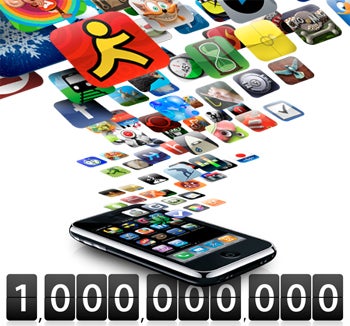
OK so in 9 months customers of Apple have downloaded 1 Billion Applications for the iPhone AND iPod Touch.
I look upon this not as a demonstration of the market for mobile data services but rather the demand for personalisation. As before with people buying ringtones and wallpaper owners of mass market consumer electronics wish to make them unique.
I am not an iPhone user but I am someone with a Touch. I have 20 applications that I use on my iPod and have removed 6 that didn't work. The average for each of my applications is 4 updates since I have installed them. Does Apple count these as 26 Apps or 90 something?
I understand that Game Theory is deployed by the Vendor of an App to keep it in the charts thus I expect that we are looking at Double Counting.
As a Touch user I can only connect via WiFi but as someone who works in an environment that such services is ubiquitous connectivity other than when in Transit is good. How many iPhone users are also doing so over WiFi rather than 2G/3G mobile? Thus the next time that someone tells me that Mobile Data is mainstream can they at first demonstrate that what they are doing is possible on a handset that is not Smart?
The next few months will be interesting in that the economic downturn means that the old subsidy model is over and so will smartphone numbers grow if the consumer has to pay up front for the handset? Without a Smartphone what of the market for Apps?
When I can get Opera on my Touch I will consider that Apple is Open and Mobile Data is more than niche.
Wednesday, February 25, 2009
The Rise of the App Store
Over the last three months more and more of those that I have met who are new to Mobile say that they have joined because the industry has gone "Open". They tell me that the App Store shows that the walled garden of the operators has finally been broken.
As someone who has been in the industry for over twenty years I have to inform then that the assumptions that they are working on are wrong. We have seen all this before. Not very long ago O2 had its Source developer community, they gave access to the O2 labs and test equipment for developers to use. Companies big and small whent to Ealing or Marlow to show that they had just the application that was going to monitise the mobile web. I did not see one single company that made money from the relationship. O2 started charging developers for access to the lab and then SourceO2 stopped.
Vodafone, T-Mobile and Orange all had Partner programs that were aimed at launching applications to the consumer all of these have been scaled back.
This week we have news from America that the App Store might be a bubble in that those who download do not use many Apps. This matters if your business model is ad supported. The Apple App Store needs to learn from the Palm developers, I will believe that it is open when I can download Opera for my iTouch o replace the iCal with something more suitable.
I do not see the use of App stores as something that will improve the user experience. I have persisted in try to make the Yahoo!Go service work on a number of handsets. On my latest Sony Ericsson it no longer connects to the server and so cannot update, it did for a while then it stopped. On my HTC Touch Plus the application works once in every five attempts! These two handsets are on different networks, I think the issue is that the network api has changes on my Orange handset, it might be an issue with memory on the handset with T-Mobile the issue is with the Radio Network I think. Poor quality of service means that regardless of excellent design an App will become unloved and unused.
Friday, January 23, 2009
A New Dawn or the beginning of The End for Nokia?
This week we have seen the presentation of results for Nokia and Apple which in headline terms present a change in the fortunes of the leader and a significant challenge at the high end of the market.
In his presentation Ollli-Pekka Kallasvuo Chief Executive of Nokia said “In recent weeks the macroeconomic environment has deteriorated rapidly, with even weaker consumer confidence, unprecedented currency volatility and credit tightness continuing to impact the mobile communications industry. ”
Apples results show that it sold 13.7m devices in 2008 which is about 1-1.5% of the total worldwide market by volume. The last quarter saw only 4.4m sold rather than the 5m the market estimated. The key comment made in the Earning Call was that the iPhone performs poorly in non-subsidised markets, indicates that at some point when demand evens out carriers will have more power over the price they pay Apple for the handset.
With 40% of the handset market and the Integrated model rather than contract manufacturing Nokia has better Economies of scale than its rivals. Apple is a design house that gets its handset made by Hon Hi as a contract manufacturer. When you are making Phones in small volumes doing so in someone-else's factory makes sense however is it something that works when you have more than one design and 10% of the market?
Whilst some see the entry of Apple and Google into the handset market as the opening of the ecosystem thanks to the application platforms that they present I have to ask if the economics work? The Network Operators have made investments in infrastructure, distribution and support over the last 20 years. Why would they not expect some return on that investment and security over the future customer revenues?
Looking at the history of Mobile I recall that Nokia assumed that with the arrival of Data services in the late 1990's it presented a chance to take control of the consumer with the launch of Club Nokia as the primary Wap bookmark. The result was a boycott by the networks until they localised devices for each Operator.
Talking to those who work in FMCG I am told that advertising is not about getting someone to switch from Coke to Pepsi but rather to get them to increase the volumes they consume. The same is true with Handsets most people say that they are a Nokia user, Sony Ericsson person, Blackberry Addict rather than Orange customer, Vodafone Fan, O2 Punter. This Brand loyalty makes it difficult for new entrants to capture market share the rise of Blackberry and HTC has taken 10 years to achieve.
The presentations at Barcelona next month will be interesting in that we in Europe will get to see the new Palm Pre and perhaps the first Android based handsets from Motorola as well as new handsets from all those in the mainstream. I hope that we will get to see the first devices that use the Snap Dragon chip which could offer features better than the current smartphones with hopefully better battery life.
Nokia will innovate devices in the economic downturn. The conditions hopefully will mean that they cut a number of handsets from the product range in an effort to improve the user experience and quality of the offering. In light of the downturn will Motorola, Samsung and Sony Ericsson be able to do the same? If they fail to then they will be the ones who lose out to the New Entrants. Before I see Apple as anything other than an opportunist they will need to offer a range of handsets similar to their iPod or Laptops.
Sunday, November 09, 2008
Is this lazy analysis?
The last few days has seen a number of sites pick up on the latest news from Canalys bout the shape of the smartphone market. The latest view on the shape and movement in Smartphones is that Apple has grabbed second place in the market with some 17% jumping over RIM and Windows Mobile. Getting detailed numbers on the size of the business market is very difficult and looking at the PR for this report I have to question some of the assumptions.
Whilst I have no reason to question the analysis of Apples success with the 3G iPhone I have to question the numbers for both RIM and Windows Mobile. Over the course of my work I has been difficult to accurately get shipment numbers for either of these companies, the Management of both are very good at not answering questions and the fact that the distribution channels are different to the classic handset business that sell to consumers. Whilst both RIM and HTC do sell handsets to the consumer most are business sales and are thus far more difficult to measure.
I do agree that Apple will have a fight to keep it's position as number 2 in the market now that most fans who wanted the God phone have got one. Since the period this report covers is the one that includes the summer I would expect to see changes in the next two reports that see Apple slip to 4. Symbian's performance as the dominant supplier could be interesting, this report shows that in the period 18.5M Symbian handsets were sold which is somewhat above the forecast given by Symbian themselves at their recent Smartphone show.
Whilst I have no reason to question the analysis of Apples success with the 3G iPhone I have to question the numbers for both RIM and Windows Mobile. Over the course of my work I has been difficult to accurately get shipment numbers for either of these companies, the Management of both are very good at not answering questions and the fact that the distribution channels are different to the classic handset business that sell to consumers. Whilst both RIM and HTC do sell handsets to the consumer most are business sales and are thus far more difficult to measure.
I do agree that Apple will have a fight to keep it's position as number 2 in the market now that most fans who wanted the God phone have got one. Since the period this report covers is the one that includes the summer I would expect to see changes in the next two reports that see Apple slip to 4. Symbian's performance as the dominant supplier could be interesting, this report shows that in the period 18.5M Symbian handsets were sold which is somewhat above the forecast given by Symbian themselves at their recent Smartphone show.
Sunday, July 20, 2008
iPhone 2.0 a stepping stone not Nirvana
So one week into iPhone 2.0 and what do I think so far?
The device is owned by four friends so far. Another few have said that they would upgrade to one after the summer holidays once others have smoothed out the bugs for them.
Would I get a iPhone or am I waiting for a Sony Ericsson Xperia X1 which should be available in September?
I think that I will pass on the iPhone at present. I was lucky enough to be given a 32GB iTouch which I have upgraded to 2.0 and so am able to share in some of the excitement of the App Store. I would have issues with the iPhone on battery life and my big fat falanges make text input a bind. I also am finding Mobile Me a little light of functions compared even to the SE Phone Suite when it copmes to moving data between laptop and device.
The App Store is interesting and I wonder how long before we might see similar on the Operator Portals for ALL handsets. Russell Beattie points out that it is not something thought up by Apple but rather borrowed from Qualcomm who developed it for the Brew Platform.
I am still to be convinced that Mr Jobs is committed to the Mobile Phone market. You only have to look at the present pain felt by others to ask if he has the endurance? The iPhone has not broken the market for Mobile, Apple have learnt just as Nokia did that the Networks are still key in any relationship with the user thanks to the billing relationship reather than coverage. Whilst we see statistics that show a significant number of users of mobile data services none yet say that for any particular service they are exclusive users of the service! Thus Apple are doing things better than others but it is still the same user activity if different experience.
I might become more conviced about the iPhone if I could discover more than one form factor. When it comes to iPods I am give a choice not just in terms of storeage but also in terms of form factor with the Shuffle, Nano, Classic and iTouch but when one looks at the iPhone you get two coloure and two sizes! Not exactaly a wide range, even compared to RIM for example.
I am sure that now we have a 3G iPhone we can expect to see more people using one. A number of committed MAC fans will now be ready to own one, dispite having to downgrade the quality of their camera. I am confident that in those markets where the Consumer has choice we will see even better penetration. I guess we will have to wait until we have iPhone 3.0 before we can say if this was a fad or a serious player in the game?
The device is owned by four friends so far. Another few have said that they would upgrade to one after the summer holidays once others have smoothed out the bugs for them.
Would I get a iPhone or am I waiting for a Sony Ericsson Xperia X1 which should be available in September?
I think that I will pass on the iPhone at present. I was lucky enough to be given a 32GB iTouch which I have upgraded to 2.0 and so am able to share in some of the excitement of the App Store. I would have issues with the iPhone on battery life and my big fat falanges make text input a bind. I also am finding Mobile Me a little light of functions compared even to the SE Phone Suite when it copmes to moving data between laptop and device.
The App Store is interesting and I wonder how long before we might see similar on the Operator Portals for ALL handsets. Russell Beattie points out that it is not something thought up by Apple but rather borrowed from Qualcomm who developed it for the Brew Platform.
I am still to be convinced that Mr Jobs is committed to the Mobile Phone market. You only have to look at the present pain felt by others to ask if he has the endurance? The iPhone has not broken the market for Mobile, Apple have learnt just as Nokia did that the Networks are still key in any relationship with the user thanks to the billing relationship reather than coverage. Whilst we see statistics that show a significant number of users of mobile data services none yet say that for any particular service they are exclusive users of the service! Thus Apple are doing things better than others but it is still the same user activity if different experience.
I might become more conviced about the iPhone if I could discover more than one form factor. When it comes to iPods I am give a choice not just in terms of storeage but also in terms of form factor with the Shuffle, Nano, Classic and iTouch but when one looks at the iPhone you get two coloure and two sizes! Not exactaly a wide range, even compared to RIM for example.
I am sure that now we have a 3G iPhone we can expect to see more people using one. A number of committed MAC fans will now be ready to own one, dispite having to downgrade the quality of their camera. I am confident that in those markets where the Consumer has choice we will see even better penetration. I guess we will have to wait until we have iPhone 3.0 before we can say if this was a fad or a serious player in the game?
Monday, November 05, 2007
The iPhone is coming
This week O2 stepped up the marketing push for the iPhone. The FT ran a story that they expected to sell 200,000 handsets before Christmas. Peter Erskine was on the BBC radio spreading the word prior to launch on Friday.
Now in the run up to Christmas the UK will buy some 3Million handsets and so 200,000 does not look that great. The concern that I have is whilst the Apple store is always busy I just do not see the consumer demand once you have managed to use the phone. I think that a large number of those handsets sold by Carphone Warehouse could be returned by disappointed customers looking to get something that works.
Whilst I agree that O2 is a Consumer Network I do not think that many on the network are happy to pay over £45 per month. I can only see that the iPhone will not drive the business forward, rather it will expose the limited capability of the O2 network. I also do not think that the O2 and Apple brands are aligned. O2 claims that a third of all text messages are sent on its network, the latest figures show that over 1 billion were sent in the UK. As I and others have said the iPhone does not do text very well this is another reason why I say that it will not be the happy event that some are saying.
Watching TV last night and I saw my first iPhone advert and I have to say that I was not overly impressed. This was an advert that showed some of how the handset works.
Just hope that the Google Phone is something that breaks the game open when the covers come off this week.
Now in the run up to Christmas the UK will buy some 3Million handsets and so 200,000 does not look that great. The concern that I have is whilst the Apple store is always busy I just do not see the consumer demand once you have managed to use the phone. I think that a large number of those handsets sold by Carphone Warehouse could be returned by disappointed customers looking to get something that works.
Whilst I agree that O2 is a Consumer Network I do not think that many on the network are happy to pay over £45 per month. I can only see that the iPhone will not drive the business forward, rather it will expose the limited capability of the O2 network. I also do not think that the O2 and Apple brands are aligned. O2 claims that a third of all text messages are sent on its network, the latest figures show that over 1 billion were sent in the UK. As I and others have said the iPhone does not do text very well this is another reason why I say that it will not be the happy event that some are saying.
Watching TV last night and I saw my first iPhone advert and I have to say that I was not overly impressed. This was an advert that showed some of how the handset works.
Just hope that the Google Phone is something that breaks the game open when the covers come off this week.
Thursday, January 11, 2007
My 2p worth on the iPhone
Rather than post this at the time of Steve Jobs announcement that Apple had joined the handset market I decided to wait and see what others had to say before adding to the noise.
What I know about the new phone has been gathered from the Internet and Press rather than me actually seeing the device at MacWorld. Carlo and Russell have done a good job looking at the launch of the phone and others comments. Ajit over at Open Gardens has done his usuall meta analysis of the situation. Ged at Renaissance Chambara says that like all Apple fan boys his thinks that the new phone is sexy it is not for him.
I think that what Jobs has done is disruptive but I do not think that Nokia and Sony Ericsson needs to worry too much about this first release. My hope is that the launch of the iPhone will effect the way that Mobile Networks deal with User Interfaces. I think that as a closed system rather than a smartphone what Apple have done is launch a niche handset for the US market. As such I do not think that the iPhone will get a market share much larger than either the Blackberry or WindowsMobile.
Working with Mobile Networks as I do I have to say that they have issues supporting all the formats and operating systems that they do at present adding another will increase the complexity by another factor. Just look at the number of people who have complained about the lack of support for Treo handsets and ask why would Apple be any different?
I think that in a months time we will see a number of new handsets that will make the iPhone look very dated and this will mean that the iPhone becomes something akin to the Mottorola Razr i.e. the Fashion Victims handset where form out does function. This being the point I fear that I might just be buying two when the launch so that my twins can fit in at their new school.
It looks like the the Independent has the same view as me. Hamish McRae says that Apple's entry into the phone industry will not change the market, its innovation might! The more I chat with others the more my opinion crystalises. I do not think that we can expect to see Apple replace Nokia, Sony Ericsson, Motorola and Samsung at the top of the tree after all we are talking about ONE handset. The fact that are in the market might however finally force Motorola to do something about its appalling user interface. Apple could force Sony Ericsson and Nokia to take their A Game to the networks and insist that customisation of the interface is no more than the placing of short cuts onto a phone. A word of caution for Apple has to be that the list of those who no longer make handsets is very long and if they are not careful they will join it.
What I know about the new phone has been gathered from the Internet and Press rather than me actually seeing the device at MacWorld. Carlo and Russell have done a good job looking at the launch of the phone and others comments. Ajit over at Open Gardens has done his usuall meta analysis of the situation. Ged at Renaissance Chambara says that like all Apple fan boys his thinks that the new phone is sexy it is not for him.
I think that what Jobs has done is disruptive but I do not think that Nokia and Sony Ericsson needs to worry too much about this first release. My hope is that the launch of the iPhone will effect the way that Mobile Networks deal with User Interfaces. I think that as a closed system rather than a smartphone what Apple have done is launch a niche handset for the US market. As such I do not think that the iPhone will get a market share much larger than either the Blackberry or WindowsMobile.
Working with Mobile Networks as I do I have to say that they have issues supporting all the formats and operating systems that they do at present adding another will increase the complexity by another factor. Just look at the number of people who have complained about the lack of support for Treo handsets and ask why would Apple be any different?
I think that in a months time we will see a number of new handsets that will make the iPhone look very dated and this will mean that the iPhone becomes something akin to the Mottorola Razr i.e. the Fashion Victims handset where form out does function. This being the point I fear that I might just be buying two when the launch so that my twins can fit in at their new school.
It looks like the the Independent has the same view as me. Hamish McRae says that Apple's entry into the phone industry will not change the market, its innovation might! The more I chat with others the more my opinion crystalises. I do not think that we can expect to see Apple replace Nokia, Sony Ericsson, Motorola and Samsung at the top of the tree after all we are talking about ONE handset. The fact that are in the market might however finally force Motorola to do something about its appalling user interface. Apple could force Sony Ericsson and Nokia to take their A Game to the networks and insist that customisation of the interface is no more than the placing of short cuts onto a phone. A word of caution for Apple has to be that the list of those who no longer make handsets is very long and if they are not careful they will join it.
Subscribe to:
Posts (Atom)


.jpg)