Today at the Science Museum Everything Everywhere entertained the dumb and witless of the British Press to its "plans" for the launch of LTE services in the UK. Next month they will give the opportunity to a few to have a service that is so far away from 4G standards that it's laughable. EE are offering the consumer the chance to experience a Mobile Broadband experience of up to 8Mbps which is slower than some with HSDP+ devices on Vodafone are capable of getting.
This launch has every opportunity of being an even bigger disappointment that 3G was in 2003 when coverage was very poor and devices were not best suited for the improvements offered by the new technology. The real benefit of 4G is not in services to "smartphones" rather it will be improved connectivity for laptops and tablets or it will be delivering highspeed broadband to rural areas. Everything Everywhere has no intention of offering such services any time soon. Perhaps that is because at present it has problems giving 3G services to these markets.
The UK Government has so far managed to fudge and fiddle the sale of 4G spectrum and hopes that in allowing Everything Everywhere rights to run a second rate service they can force Stakeholders to participate in a flawed sales rather than seek judicial review and see yet more delays. I would rather have a delayed launch of 4G that gives Britain a significant uplift that enables it to compete with rivals that a glitzy marketing launch of an inferior service that history will see as willy waving - all be it with a shinny new iPhone.
Tuesday, September 11, 2012


Wednesday, September 05, 2012
Just how stupid were the Conservative Government to privatise British Telecom?
In 1984 I left school with a few A levels and started looking for a job rather than go to University. At the same time Margaret Thatcher's Government were in the process of Privatising the Nationalised Industries and the floated British Telecom. We were told that the new company would be more efficient and the Economy would benefit from a better run business. "We want BT to have the complete freedom that a private company has. Only in this way can the needs of the country and of BT be met. The Bill creates freedom from Treasury and ministerial control. It also gives freedom to BT to grow, to operate overseas, and to make acquisitions... the market is growing so quickly that BT can expand only by becoming a free, independent company" (Kenneth Baker, Minister for Industry and Information Technology, 29 November 1982).
"If we were to continue with the old cosy relationship of a public utility with an exclusive privilege, having its accredited manufacturers continuously supplying equipment to the same specifications, this country would become a telecommunications backwater" (John Butcher, Under Secretary of State for Industry, 15 February 1983).
So lets wide the clock forward to 2012 and look at what the UK needs in terms of telecoms products and how BT are able to service those needs. Today in Parliament the Prime Minister said the he wanted hi Secretary of State for Culture to build the High Speed Broadband the country needs to get the Economy growing. I almost chocked on my coffee, just how was she going to incentivise a Private Company to invest in infrastructure at a rate where it was likely to lose money? The Chairman and Chief Executive of BT can rightly say that regardless of what the Government wants they answer to the shareholders who want a return of their investment.
Back at the time of the first Internet bubble in the late 1990s Britain was a laggard when it came to Broadband services and speed. The issue was that BT had not invested in new service because the regulator and the shareholders were acting as an anchor. In other parts of Europe State Owned Monopolies had been able to get a march on the UK with the deployment of ADSL services. In an effort to remedy this the Regulator decided that BT would have to give access to it's exchanges for rivals to install equipment and hopefully introduce competition that would force BT to launch faster services to maintain customers. Rather than achieve what they hoped for the Regulator they found the BT went slower holding back the introduction of faster services and future Upgrades to High Speed Broadband have been even slower.
Over the past year I have watched the deployment of High Speed Fibre to my local exchange in West Hertfordshire. The project was first expected to be completed in January 2012. The Exchange did no go live until July 2012 a delay of six months. The service available to most households is not the Infinity product advertised on the television but rather a service a quarter of that speed. The reason is that the suburban town that I live in has too much copper buried in the ground rather than running through ducts. This is expensive to replace and only seems to be done by BTOpenreach if the cable has been stollen. Thus the market does not seem to be working for the benefit of the consumer or the Economy because BT does not have a financial incentive to maintain the best possible network.
In the last financial year BT has generated some £2.5Bn in free cashflow, it has also paid a dividend to shareholders. These funds could have been used it the Utility was still in State ownership to invest in the deployment of Highspeed Broadband across the whole of the UK. The Privatised BT has not become free and it has not increased the number of suppliers used to build and maintain it's Network rather it has decreased them as they seek to reduce costs. The cost cutting measures has also seen less money spent on training and development of Engineers the almost total closure of it's R&D facilities and consumers suffering poor quality service. (NB Once I have an update on my current service complaint to the Chairman's Office at BT I will write another post on just how they are failing to deliver)
I look across at France Telecom, Deutsch Telecom and KPN and think that Conservative Prime Ministers have very little understand of the strategic importance of world leading communications networks. When I visit somewhere such as Korea and Japan and see what they have achieved with Super Fast Broadband delivered via a form of planned economy and I wish that my Parents had not returned from the Far East in 1976 and I worked there.
"If we were to continue with the old cosy relationship of a public utility with an exclusive privilege, having its accredited manufacturers continuously supplying equipment to the same specifications, this country would become a telecommunications backwater" (John Butcher, Under Secretary of State for Industry, 15 February 1983).
So lets wide the clock forward to 2012 and look at what the UK needs in terms of telecoms products and how BT are able to service those needs. Today in Parliament the Prime Minister said the he wanted hi Secretary of State for Culture to build the High Speed Broadband the country needs to get the Economy growing. I almost chocked on my coffee, just how was she going to incentivise a Private Company to invest in infrastructure at a rate where it was likely to lose money? The Chairman and Chief Executive of BT can rightly say that regardless of what the Government wants they answer to the shareholders who want a return of their investment.
Back at the time of the first Internet bubble in the late 1990s Britain was a laggard when it came to Broadband services and speed. The issue was that BT had not invested in new service because the regulator and the shareholders were acting as an anchor. In other parts of Europe State Owned Monopolies had been able to get a march on the UK with the deployment of ADSL services. In an effort to remedy this the Regulator decided that BT would have to give access to it's exchanges for rivals to install equipment and hopefully introduce competition that would force BT to launch faster services to maintain customers. Rather than achieve what they hoped for the Regulator they found the BT went slower holding back the introduction of faster services and future Upgrades to High Speed Broadband have been even slower.
Over the past year I have watched the deployment of High Speed Fibre to my local exchange in West Hertfordshire. The project was first expected to be completed in January 2012. The Exchange did no go live until July 2012 a delay of six months. The service available to most households is not the Infinity product advertised on the television but rather a service a quarter of that speed. The reason is that the suburban town that I live in has too much copper buried in the ground rather than running through ducts. This is expensive to replace and only seems to be done by BTOpenreach if the cable has been stollen. Thus the market does not seem to be working for the benefit of the consumer or the Economy because BT does not have a financial incentive to maintain the best possible network.
In the last financial year BT has generated some £2.5Bn in free cashflow, it has also paid a dividend to shareholders. These funds could have been used it the Utility was still in State ownership to invest in the deployment of Highspeed Broadband across the whole of the UK. The Privatised BT has not become free and it has not increased the number of suppliers used to build and maintain it's Network rather it has decreased them as they seek to reduce costs. The cost cutting measures has also seen less money spent on training and development of Engineers the almost total closure of it's R&D facilities and consumers suffering poor quality service. (NB Once I have an update on my current service complaint to the Chairman's Office at BT I will write another post on just how they are failing to deliver)
I look across at France Telecom, Deutsch Telecom and KPN and think that Conservative Prime Ministers have very little understand of the strategic importance of world leading communications networks. When I visit somewhere such as Korea and Japan and see what they have achieved with Super Fast Broadband delivered via a form of planned economy and I wish that my Parents had not returned from the Far East in 1976 and I worked there.
Thursday, February 23, 2012
What I'd like to hear in Barcelona next week
Have been thinking about the upcoming MWC2012 and rather than looking at what shinny new handsets will be shown and how the GSMA will be "helping" the industry move forwards through strategic alliances I have written a wish list of what would help the mobile industry move forward.
As we make major strides toward the fourth generation of mobile networks I would like to see the head of Ericsson lead the industry forwards with an honest assessment of the current state of deployment of 2G, 3G and 4G networks what they are capable of doing and how they need to be melded together to deliver quality of service and best speed possible. The need for better chip design and roadmap to LTE terminals capable of using the high-speed network. What networks need to do to match services with capability.
I want the CTO of a Major Mobile Network to stand up and talk about Security, Security, Security as the cornerstone for the business if we are to move towards cloud based services and leave behind the world of Apps. I am looking for a CTO who can tell me how his Network is secure, my Device is secure and finally my Data is secure. Once he can tell that all three are secure then we can start to talk about the quality of the network in terms of bandwidth and coverage to enable me to do stuff via the Cloud rather than solid state.
I would like a Politician to start talking about how the consumer needs to pay for the use of the resources they consume, how spectrum is a key resource and in an effort to stop people wasting it people need to understand the present model of billing is no longer fit for purpose. In an effort to aid the consumer his Government has stopped selling spectrum but rather is now licensing blocks to Networks and the effectively regulating them for poor services, once the network is built and running effectively they intend to tax the Networks on profits made. The Regulation of New Mobile Networks will be done of the basis of coverage and speed in relation to the population and to assist in the quick and effect build out of networks planning permission has been revised to allow replacement of old equipment with the latest without needing a new permit.
Can we have an evangelist from the Silicon designers who is capable of explaining why System on a Chip designs are a compromise whilst we await better batteries, how the new Wifi and Fixed Wireless Broadband standards will impact on the development of GSM standards and how at this moment there are no chips capable of covering all the available spectrum and thus Software Defined Radio is once again stalled. Will the industry representative also take a stick to the current trend towards smaller smartphones and point out that what is needed are designs that will get teens, blue collar and emerging markets doing more with mobiles?
Finally can Martin Sorrell talk about how marketing is killing mobile as only an idiot would expect advertising to generate the revenues needed to give someone a free phone. As we become more aware of the way data on our habits is sold what kind of fool would allow themselves to be ripped off? What Brand would coupon customers to such a level that they make no money, once to get someone in the shop fine but if you have to keep doing it then they are parasites not customers because they will never afford what you are selling. Effective marketing is about getting people with money to pay as much as possible for stuff, when they stops the business starts to die and finally goes bankrupt. Consumers use of mobile is different from fixed and so don't just think that it is a new media on which to send junk mail.
The above are my hopes, my expectation is that we will be talking about a few new handsets that will keep Android out in front of the iPhone, RIM still has not got what it takes to compete with Apple and Google and Nokia can still make great hardware. The GSMA will talk about m-Health being the next big market for mobile and Machine-2-Machine is going to be massive (it's not as big as they think because lots of smart-meters will use powerline technology rather than 3G) and look at the success of M-Banking.
Monday, January 16, 2012
Why Apple is bad for the Mobile Industry
If you read this blog or follow me on Twitter then you will know that I am no fan of Apple.
I do not buy into the myth that they are interested in what the consumer wants but rather feel that they are very good at marketing compared to their peers.
The current focus on lets make everything a slim as possible is not a benefit but rather an obsession in controlling component manufacturers and in doing so setting prices. Why is Apple's management of the supply chain OK and Tesco's controlling of farmers wrong when they are both the same thing?
Recently I have been using my old Ericsson T68i and the ergonomics of the phone makes it a joy to hold and use. More importantly put the handset down on a surface and the rubber back means that it does not slide around. OK I am use the T68i as a PHONE and so was interested in calling and SMS rather than web based apps but then I was working rather than looking to fill dead time.
Because of Apple's lead as the trend setter other makers of Smartphones are all attempting to make handsets that look and function in the same way as an iPhone. I had hoped that design at Nokia had not been sacrificed on the "burning deck" of re-engineering the Firm undertaken by Steve Elop but unfortunately they seemed to have lost all their corporate intelligence. Nokia Engineering had grown too big but at one time they had people who were concerned by the response a user got when pushing a button and attempted to make the experience better.
What concern does Apple have for the user? I fear that it is more akin to IKEA than Georg Jensen. After a while as consumers learn more about how to use products that they own they understand the failings of low cost mass design and production and are willing to pay more for a better experience. Yet what improvement do we see with the iPhone in terms of industrial design?
If Jonathan Ive is a Design Hero then he needs to demonstrate such by following the actions of Dieter Rams rather than just mouthing kind words about his ability. Rams with Vitsoe and Braun was capable of designing products that function on a higher level than Apple has ever done. If you want to learn more then get yourself a copy of As Little Design As Possible.
Others are starting to realise that Apple's business practices are bad for the sector as a whole they do not seem to be in the UK or US but rather Germany and France where the company has a smaller impact as a whole. I have long been a advocate of the fact that most people do not seek to converge to a single device but rather are happy to carry a number of them. Sit on public transport and you can watch people switching between phone, MP3, e-reader, tablet rather than using a single device. Apple has benefitted from this divergence getting people to buy iPhone, iPod, iPad yet when it comes to the phone they offer one single device in terms of form factor.
If I want to create something then a touch screen device does not make it easy. Yes I know David Hockney makes art on his iPad but he also uses a Hasselblad and very large canvases and paint for his large public works. A keyboard with good design allows faster typing than I can do on an iPad even if that is a simple one such as on my T68i let alone a QWERTY design.
Then how about Apple giving a screen that is better in bright light that is also capable of falling three feet without breaking? My observation of others on Public Transport usually allows me to spot two or three broken iPhone screens. I do not see any broken Sony Ericsson, Samsung, HTC, Blackberry or Nokia screens.
If an iPhone is about wonderful User Interface design the can't I expect more of a physical interface than a single button?
If an iPhone is about wonderful User Interface design the can't I expect more of a physical interface than a single button?
Wednesday, January 04, 2012
Thinking about Mobile Handsets
Over the last few weeks I have been looking at upgrading the handsets of my three daughters and so have reviewed what is on the market and what they wish to do with there phones.
This will be the fourth handset that my Twins have owned. At the moment they are happy users of a Blackberry Bold which are starting to show signs of age. They are not heavy users of either text or voice but they use BBM and Facebook with a little email. They are thus happy with the QWERTY form factor and when asked if they wanted a Blackberry Touch they declined as the find the lack of keyboard slows them down. They are looking for something that is robust enough to live with the knocks of life in a teenage girl’s pocket and bag that means it has to bounce before it breaks.
The youngest wants her second mobile phone to have a few more features that the basic candy bar she currently has. She does not want an iPhone as “the girls who have one at school are bullies and they all seem to be broken within a few weeks.” I have been looking at a number of Android handsets but she seems to like the Nokia Lumina 800 I have been playing with because it does not look girlie, has a good camera and the battery lasts.
When you look at the shelves in a phone retailer at the moment if you take the Blackberries away what you see is a Smartphone format that is almost uniform. It reminds me of the mid 1990s just as the industry was about to under go massive expansion and all you could have was a black brick, then Nokia launched the 5110i with snap on covers and Motorola and Samsung decided that we might like silver clamshells.
Perhaps we can pause for breath on the development of Operating systems and start to look at form factors? For a number of years I have thought that mobile users are unlikely to carry just one mobile phone when they are able to purchase devices and looking at fellow travellers on the train it does now seem that time has come. Not everyone wishes to carry a device with a 3½ to 4½ inch screen as a phone, so why not have some devices that don’t have a touch screen but rather a simple keyboard?
The interesting thing is that none of the three seem to be demanding a wide range of Apps with which to “personalize” their handset. The number of people they “chat” with on Facebook is a subset of their “Friends” with whom they are social both in the real and virtual world. They do want a device that gives access to YouTube. A VPN which would give access to catch up TV from both the UK and US would be very welcomed. But if that was not available no problem as they can do so via Laptop or Tablet.
When it comes to an upgrade of my handset, something that I can quickly synchronise with my car, laptop and headset would make life easy. As I tend to use my phone whilst driving something with very good voice command would be welcomed. I would love to get rid of the touch screen as too often I put my current phone in my pocket after use and the discover that because it was still active I have played audio books, surfed the web and changed the keyboard, theme etc. . Over the last 14 months my favorite handset has been my Vertu Ascent because it does what I want it to do and when I need something I just use the Concierge service.
Wednesday, December 22, 2010
Will 2011 be the year that we see that the iPhone had no clothes?
I have spent most of this year questioning just how smart a phone is an iPhone. In my opinion it is neither smart or a phone. Its success can be put down to the fact that Apple have managed to create a massive buzz around it. A mixture of celebrity endorsement alongside massive advertising campaigns has made the device wanted by the public but does that make it a good phone?
To my mind the problem with the iPhone is that the App Store has failed to maintain innovation and the refresh of a new OS which saw Steve Jobs push facetime ™ as the new way to communicate show that Apple has grown tired. The Company seems to be pushing development in the area of the App Store with the focus on the iPad and Apple TV rather than making significant progress with phones. If I were a shareholder of Apple stock I would be asking when can we expect to see a similar diversity in form factor for phones as we see in iPods? What is the company doing to improve the quality of phone calls?
I accept that in some markets the iPhone has been very successful. However the same was true of Motorola with a number of handsets and look at them now. I am sure that for some the fact that you see so many with an iPhone has taken the luster off the product. A number of those I know who are currently using an iPhone 4 acknowledge that they have two-three old iPhones at home having upgraded as each new machine is released. Yes I know that the same can be said for Blackberry Users or Nokia fans but the buzz around them is not as loud.
Ask Motorola about how fast the consumer can turn and you will be told that the abandonment can be faster than the celebrity status of a contestant in Big Brother. I think that Apple will play a significant part in the mobile device market for quite some time. I do not think that the product will be a phone however. As consumers we tend not to converge on a single device but rather diverge. As consumers become more knowledgeable about costs and experiences they also demand more. The novelty of the App has long past for most of us and so we are looking at the utility of our devices.
The combination of living in the Cloud and the iPad means that I can now work without my MacBook Pro for most client engagements. Thus I carry a device that allows a better user experience than an iPhone when it comes to watching video, reading books/papers or casual web surfing. As I become someone who carries multiple mobile devices rather than have a mobile subscription for each I have bought a mifi dongle for those times when wifi is not available free of charge (my ISP gives me free access to hotspots as part of my service.)
So will Apple surprise us with an iPhone Nano; will we see HD Voice available on the iPhone 5 or will the iPhone become a museum exhibit? I think that Apple are focused on the revenue streams from the iTunes store and thus we may never see an iPhone7 as the exit the phone business.
Tuesday, October 26, 2010
So where in the centre of the mobile universe?
Spent an enjoyable couple of hours today putting the world to rights with some guys I respect in the mobile ecosystem. After joking about now nothing can work unless it's invented by Steve Jobs and comes via an App we turned to trends developing now. Both said that they are considering relocating to San Francisco as at this moment it seems to be the centre of influence as to where Mobile is going. They say that at this moment it is where the money and brains are.
But wait is that true?
I fear that they may be drinking the wrong type of Kool-aid. Whilst at this moment in time everyone feels that the mobile industry rotates around planets Apple and Google these are bubbles similar to the property and internet hype. The risk is that the centring of focus in the Valley will limit the view of demand.
When it comes to adoption has the rise of the App been as successful as SMS, Voice Mail or Ring Back? Will history judge the iPhone and Android as nothing more than a ringtone?
If I were to start a new venture then my investment would be in machine-to-machine and/or mobile healthcare. Given that I would want to develop relationships that enable me to build and exit a business is the Valley the best hub? Should I chose to relocate could I cope with Americans claiming that they rule the mobile industry when they have no understanding of the global standards, have yet to come to terms with the pre paid market because of the idiosyncratic payment system in the US of receiver pays and coverage of mobile networks is patchwork?
But where would I set up?
Europe is fragmented with many small sites offering expertise when it comes to hardware/software/services but does not have the access to finance needed to develop start-ups.
India has lots of Engineers but does not seem to have the ethnographers needed to offer a usable interface. It would be like returning to a Motorola Razr, wonderful to look at but a disappointment to use on a daily basis.
Japan offers money, wonderful networks and engineers looking to develop things people will use. However very few make call on a phone and so what we see is pocket computers as we head towards the cloud.
Where would you set up to have the best chance of success?
Monday, October 11, 2010
What would I rather pick up my phone or my keys as I leave my house?
Today Nokia launch their first NFC enabled handset.
With one of these phones can I replace my Oyster card? How about my NFC car fob? What about the Garage Door? An my Bank Card has NFC so can I replace that?
The answer to all these questions is at this moment in time is NO. Therein lies the problem with standalone development and the current fixation that the App Store is the answer.
Nokia has over the last four years been working with a number of stakeholders in the NFC ecosystems. Trials that I know of include a trial of season tickets at Manchester City Football Club, replacement of Oyster Cards in London, cash replacement trials in France. They have worked hard on the development of a technology standard that will replace card readers over time, they have studied hard the ethnology around the change in behaviour.
Why then is the launch of the new handset inhibited? Because the other stakeholders in the NFC space fear that they will become locked into a walled garden controlled by Nokia perhaps? How about the fact that the innovation required for such a service now faces a lag because too much resource is directed to the needs of Apple and Android development?
If the mobile is no more than hardware and as a User I have an expectation that just like an MP3 player I should be able to fill it with the content that I want. The launch of new technology such as NFC into the mass market needs to be Federated more. That is when Nokia launch such a phone it needs to be reported by my Bank, Carmaker and Transportation provider who all tell me that I can now use it to access their services. Lets face it no Call Centre Assistant you talk to so far would be able of facilitating the firmware upgrades needed to install new services.
Tuesday, September 14, 2010
Sorry I have been quite
It has been some time since I have posted anything.
The reason is that I have become more and more frustrated with the fixation that the answer is the iPhone for all things that are wrong with the mobile phone market. Just as Motorola got it wrong with placing all its eggs in one basket trusting everything to Apple is flawed.
Those that ask, what about Android? Have to understand that Google is just another walled garden and it to is flawed for other reasons.
The fact that both of these handset developers see the future as about the power of the App store highlights the failure to understand the ecosystem that is the Mobile Phone Industry. Observe the clamour of Vodafone Shareholders looking for the fire sale of minority equity assets to see the bonfire of the vanities.
Google does not seem to understand the timeframes the Industry operates under.
Apple sees life in a binary format of winners and loser which risks seeing the foundations crumble under them. As a futurologist I read the tea leaves for Apple as potentially pulling out of the phone market. Recent developments with the iPad, iPod and Apple TV could all point to no iPhone6. If the App store was the answer look for the BBC News app on the OVI and ANDROID stores it will not be the same one developed by Fjord for the iPad.
Nokia have replaced the CEO as he was unable to develop a handset that would kill the iPhone. As Apple is a very small rival and the real fight is with Blackberry his focus was on the right place. Yes fire him because he did not stop the rise of RIM but not for the lack of a high end handset that fails to complement the ecosystem.
If you fail to understand the need to support the ecosystem what you face is failure of the infrastructure. If Vodafone cannot see a return on the investment for new base stations why are they going to build them?
Once Mobile Networks employed anthropologists and sociologists to understand customer needs and develop products. Now they live on Internet Time which works on open development with Darwinian evolution. Evolution is difficult when the search methodology is a top ten list rather than accurate indexation with a standard taxonomy.
This post is me letting off steam. I might come back and develop some of the observations above or I might lie in a dark room and listen to whale music.
Thursday, September 24, 2009
I am not something that may be owned!
Today Vodafone announced that a new service aimed at bringing together the fixed a mobile web called Vodafone 360 this is to replace Vodafone Live. The aim of the service is to gather all of a customer’s friends, communities, entertainment and personal favourites in one place.
The core of the service is a new personal address book that aims to bring together all of contacts from the mobile phone, social networks and other internet accounts. It will work across a range of handsets and synch automatically with the PC. My fear is that despite collecting contacts numerous studies show that most of us have fewer than five friends. It is this small group that we communicate the most with; so why collate a number of different lists?
Whilst I agree that the aim of Vodafone to bring the most frequently connected people closer to the front I doubt the need for a “proximity algorithm”.
The fight seems to be Vodafone against Facebook, Google and Apple for the trust of the customer. My issue is that for many they idea that they are little more than chattle is something that is unacceptable. Most consumers are anarchists in the oldest sense of the word and operate in informal social groups. Thus any attempt to control this group has as much chance of success as herding cats!
I am full of support for the adoption of LiMo based handsets and the development of a proprietary UI. But am unsure about the difference from the inq Facebook handset that won awards at this years GSMA World show in Barcelona this February.
Sunday, August 30, 2009
Confussion over the Handset market
I know that we are in a quite period as the holiday season starts to end with one last public holiday before the children return to school but if you take both the Observer and The Sunday Times you might be a little confused as to the progress of Android.
The Observer reports that the iPhone faces a threat, whilst the Times tells us that Google is failing in the smartphone market.
This week I have been talking to a number of clients about the OS battle that is taking place in the mobile phones space. In preparation for a workshop on Smartphones OS I decided that I would put aside my opinion formed by being a user for the last twenty plus years and get one of everything and use them for a few weeks. So I have started carrying a small gadget bag with something others than Nikons in. As well as the Nokia E71 I have a G1, Apple 3G, Blackberry Storm and I still carry my Sony Ericsson C905i.
I do not think that the mobile industry is in a battle for one single OS but rather the current EIGHT competing OS will be consolidated down to just three.
Talking with others who use Smartphones has been interesting. One current iPhone users told me that he was going to pass on an upgrade of his iPhone to the 3GS but rather he was moving to an Android handset and upgrading to Paid Google Apps so that he could work on the Cloud. Another told me that he keeps being surprised by RIM and has noticed how many women are using one to surf and network with rather than an iPhone. The Nokia users cannot see why they should jump ship and are hopeful that the divergence into Linux and Windows devices are little more than a distraction.
I have noticed that my iPhone seems to prefer WiFi to the poor O2 network when ever I want to use facebook, twitter, Yahoo, Shozu. The experience is no different from my iPod Touch and thus if I have an iPod why do I need the Phone element because I'm not using the phone network and payment is taken via my iTunes account. I am now using pictures in Twitter but is that worth the expense?
I seem to be having problems with the Android App Store and Installing software like Opera. The mail client seems good but the browser needs work. For me the mixture of touch and QWERTY keyboard is a pain. Might be a better experience on Vodafone than it is on T-Mobile but I am underwhelmed at present.
The Storm is an interesting experience. The device has attracted a lot of attention from my teenage twins who would both love to find in their bag for the new school year. The messaging is excellent especially BB to BB user and Facebook and Twitter are as good as on the iPhone.
I am starting to get the hang of the E71 and Ovi alongside Google Apps does make it a productive device. The battery life is far better than that of the other smartphones however I still find that I need to switch to Opera to work as quickly as I can with either my PC or MacBook. In switching to Opera a number of sites ask we to "use the browser installed by the phone manufacturer" what is this 1999 all over again?
When I am off out for a walk with my camera what do I put in my pocket? It is still the C905i it has a better camera and the battery does not die on me. Should I need it I have GPS and Opera takes care of the browsing.
From conversations and observation I feel that RIM and Linux will be two of the three that are left standing the other one is any ones guess. Mr Jobs has been at the phone thing for two years now and he still has not hit the target he set himself for sales outside of the US. If he were to launch the tablet / iPod Touch MAX and it was a success would he kill the iPhone? Most people I observe when I travel seem to have two mobile phones and they carry these in a bag rather than in a pocket and so a larger form factor will not be an issue providing that it is A5 in size rather than A4.
What ever handset OS wins the distribution model will have to change. Two year contracts will see handsets looking like they have been cared for by Vandals if my Twins handsets are anything to go by. One friend has changed his iPhone five times in the last year as it was starting to look used and the Apple Store guys let him. What is need is more Handset Vendor stores so that some may buy a handset and then buy connectivity separately. After all we know that the guy in Carphone Warehouse is not going to give us the best deal.
The Observer reports that the iPhone faces a threat, whilst the Times tells us that Google is failing in the smartphone market.
This week I have been talking to a number of clients about the OS battle that is taking place in the mobile phones space. In preparation for a workshop on Smartphones OS I decided that I would put aside my opinion formed by being a user for the last twenty plus years and get one of everything and use them for a few weeks. So I have started carrying a small gadget bag with something others than Nikons in. As well as the Nokia E71 I have a G1, Apple 3G, Blackberry Storm and I still carry my Sony Ericsson C905i.
I do not think that the mobile industry is in a battle for one single OS but rather the current EIGHT competing OS will be consolidated down to just three.
Talking with others who use Smartphones has been interesting. One current iPhone users told me that he was going to pass on an upgrade of his iPhone to the 3GS but rather he was moving to an Android handset and upgrading to Paid Google Apps so that he could work on the Cloud. Another told me that he keeps being surprised by RIM and has noticed how many women are using one to surf and network with rather than an iPhone. The Nokia users cannot see why they should jump ship and are hopeful that the divergence into Linux and Windows devices are little more than a distraction.
I have noticed that my iPhone seems to prefer WiFi to the poor O2 network when ever I want to use facebook, twitter, Yahoo, Shozu. The experience is no different from my iPod Touch and thus if I have an iPod why do I need the Phone element because I'm not using the phone network and payment is taken via my iTunes account. I am now using pictures in Twitter but is that worth the expense?
I seem to be having problems with the Android App Store and Installing software like Opera. The mail client seems good but the browser needs work. For me the mixture of touch and QWERTY keyboard is a pain. Might be a better experience on Vodafone than it is on T-Mobile but I am underwhelmed at present.
The Storm is an interesting experience. The device has attracted a lot of attention from my teenage twins who would both love to find in their bag for the new school year. The messaging is excellent especially BB to BB user and Facebook and Twitter are as good as on the iPhone.
I am starting to get the hang of the E71 and Ovi alongside Google Apps does make it a productive device. The battery life is far better than that of the other smartphones however I still find that I need to switch to Opera to work as quickly as I can with either my PC or MacBook. In switching to Opera a number of sites ask we to "use the browser installed by the phone manufacturer" what is this 1999 all over again?
When I am off out for a walk with my camera what do I put in my pocket? It is still the C905i it has a better camera and the battery does not die on me. Should I need it I have GPS and Opera takes care of the browsing.
From conversations and observation I feel that RIM and Linux will be two of the three that are left standing the other one is any ones guess. Mr Jobs has been at the phone thing for two years now and he still has not hit the target he set himself for sales outside of the US. If he were to launch the tablet / iPod Touch MAX and it was a success would he kill the iPhone? Most people I observe when I travel seem to have two mobile phones and they carry these in a bag rather than in a pocket and so a larger form factor will not be an issue providing that it is A5 in size rather than A4.
What ever handset OS wins the distribution model will have to change. Two year contracts will see handsets looking like they have been cared for by Vandals if my Twins handsets are anything to go by. One friend has changed his iPhone five times in the last year as it was starting to look used and the Apple Store guys let him. What is need is more Handset Vendor stores so that some may buy a handset and then buy connectivity separately. After all we know that the guy in Carphone Warehouse is not going to give us the best deal.
Friday, August 14, 2009
Network Coverage Issues....
A few weeks ago Ofcom published maps for all five UK Operators coverage of the UK with a 3G Signal. At the time I thought that the maps were interesting but suspected that they were overstating the situation.
With the change of handset and the fact that this Summer England are playing an interesting cricket competition I have been more concerned that usual about coverage.
I have chosen to trial the Sky Sports service on my Orange Handset. In order to be able to watch mobile TV I have to be able to get a 3G signal. If all I relied on was Orange I'd have thought that England played well in Leeds last week as all that I saw was the first three overs on Friday and 15 minutes of Broad and Swan hitting the ball to all corners. The other attempts to watch whilst I was out and about were all failures because I didn't have coverage. The issue was that I was not at home where I know Orange has coverage issues but rather I was in Central London, Oxford and around the M1. The other issue is that Ofcom says that Orange has the widest coverage.
With my T-Mobile handset I find that the traffic management is an issue in the daytime the push email on my handset does not function and email is downloaded in blocks however between 20:00 and 07:00 it does work. So just what is happening to the T-Mobile Network if it is drifting in and out?
I have "free" mobile broadband from BT which uses the Vodafone network and I have to say that on my commute into London they seem to be the only people capable of providing coverage along the Metline all the way out to Hertfordshire. The dongle also seems to function well in places where I cannot find wifi. In terms of mobile broadband Vodafone is not only faster than 3 but also has a greater footprint.
Why is this an issue?
Well in an effort to get UK working better we want to use Mobile to provide coverage to those that chose to live in a rural setting that is not covered by ADSL or Fiber-optic networks in order to give speeds of 2 Meg/Second. If those inside Government are to believe the regulator or networks that they offer British Telecom a get out clause we are in for a shock.
I don't blame the Networks completely for the failure of their coverage. Some of the blame has to be accepted by NIMBY local Governments who refuse planning for new base stations. My Lib Dem controlled council as a matter of course refuse all applications and so appeals are need to grant them. The fact that we have an over supply which has seen prices collapse makes it difficult to justify the return on investment needed to cover all of the UK. However the auctions required commitment to cover the UK with a suitable service. Today that service can be seen as a hybrid network that offers a basic connection and at times a high speed one. The regulator needs to raise the speed of the basic connection.
Without a suitable network how can a provider expect me to pay for a service. Given what I have experienced over the first week of testing mobile TV I don not expect to keep it after the free period is over. In order to attempt to use my handset as a mini-computer I have to use the wifi radio. In doing so I consume power too fast for my phone to operate all day. If I am using wifi I am not mobile but rather wireless and so might as well use my iPod Touch if all I need is small screen access or my Laptop if I want a bigger view.
Monday, August 10, 2009
72Hours in what have I learnt about my Nokia?
OK having spent the weekend learning about my E71 and setting it up what do I think now?
The Ovi service is still a LONG way off from being ready to roll. The first app I downloaded was hard to set up and does not seem to work and so I removed it. The second app that I want to download can't be!
I want to install ShoZu when I try and discover the app from my handset its not found. When I find it on the desktop I can't send it to the handset. Does it have anything to do with the lack of a suitable payment service to collect the £6 price? Before I add anything more I want to get ShoZu running.
Other issue is just how open is Ovi? Wanted to use Opera to navigate and once I logged in access was denied.
Opera install was a bit of a learning curve. Started off with thinking that I could run Opera Mini on my S60 handset. Downloaded and installed but didn't seem to working as well as it does on my SE so removed it and installed Opera Mini which is recommended for the E71.
Email seems to function well have six accounts set up and have them pushed to the handset. Works well when T-Mobile has coverage.
One other little gripe is compatibility with my MacBook. Stuck the CD in the drive and nothing happens! Quick look online and I see I can download software that allows Nokia and iCal to sync. Once done I have be able to get appointments and to do lists on the phone not interested in trying to copy Address Book as have copy on the iPod Touch.
At this moment I am happy with the progress of discovering S60 it's going better than when I used a N93i which was just to different to my day to day handset. If things still prove to be frustrating might have to see if some of my mates at Nokia are back from Summer Holidays and ask for a favour?
Saturday, August 08, 2009
Testing Nokia
Yesterday I got myself a Nokia E71 to use with my T-Mobile SIM.
Opening the box I saw a Handset form factor that I liked and despite not being a Nokia user an OS that works well. A number of things seemed easy in terms of installing the bits needed to use the phone also managed to edit contacts from my address book in the process.
Then I went over to Ovi to see what might be of interest and saw nothing. Went on the web and looked at what widgets might make Twitter, Facebook and Flickr easier to use rather than via the T-Zones portal and was again disappointed.
After 24 hours use with the handset I have email up and running for the 5 accounts that I use. Have PIM working as I would wish it to on my handset. Am looking at using Opera mini as my browser so that I can make everything work on the device as I would wish. As well as Opera I have also installed Yahoo Go 3.0 so that I can deal with Flickr and manage the SPAM flow in my personal email.
So in terms of hardware design I have a form factor that I like and a need to tweek some of the software so that the experience is a little more like that of my iPod touch rather than my Sony Ericsson C905. Do I think the E71 is a smartphone? Well at them moment it does not seem that smart. I do think that it should be a second device that means the Laptop can stay on the desk as when out and about it can offer me the functionality needed.
The camera seems to me to be something I will not be using my SE has something better and it is not often used when I have a Nikon available! The Maps function looks more interesting than the service I have tested from Orange.
The biggest issue with the E71 however is not the software or hardware it's the service provider. With T-Mobile seeking to manage costs in line with its revenues the coverage is woeful. Despite having had Planning Permission for over a year to build a new 3G mast close to my home the Local School reports no sign of construction starting. Thus I revert to using WiFi in the home, I am glad that I am on a SIM only contract which includes web n walk because if I was paying consumer contract rates I might have to start stalking the new MD.
I know that all Networks have an issue with coverage in my location and so accept blackspots but in the last year T-Mobile seem to have discovered deadzones! I would hope that investment can be made into femtocells so that the coverage issue can be resolved. WiFi is not the solution because of battery consumption. If we are to replace voice spend with data services first off we need coverage.
Sunday, July 12, 2009
All that is wrong with the US view of mobile
Have read Scoble's post on the problem with Europe's mobile scene and raised my blood pressure to a level that has caused me to post.
Here in Europe we have a number of advantages over the Americans. First we have Networks that they can only dream of in terms of coverage and speed so should the user wish to they can adopt mobile data services. We have thus decided that using a laptop with mobile broadband is a better way to surf than a smartphone.
In terms of innovation we have leadership in LTE, Handsets and Network Ownership. We are looking at how voice can be improved.
Whilst the US feels that it invented the Mobile and now once again owns the space it is not about just one device. Last year more people bought a single Nokia handset than all the smartphones sold in the world. Mobile payments in the form of micropayments for content and services in Europe is far more than Apple has made from the Ap Store.
Looking at the history of mobile data services it is far from certain that the Ap Store is going to become a cornerstone of all things mobile. One thing that Europe is better than the US at is regulation and the exclusive nature of the iPhone is something that the EU will regulate against; just ask Microsoft and Intel if you are unsure. Without regulation what is to say that the Ap Store is another AvantGo? At the hight of the dot.com bubble everyone thought that the web clipping service was the future and now it is little used.
Before we had smartphones we had PDA and everyone was using either an iPaq or Palm a few geeks preferred PSION devices, all these used bluetooth to connect to a mobile and use it as a modem. Now these devices are museum pieces.
In four years time will Apple still be in the mobile phone market or would it have moved on? At this moment in time we have seen three devices in 2 years ALL of which have the same form factor. As a historian of mobile it looks all too much like Motorola with the StarTAC and Razr rather than RIM who have transitioned from a single device to multiple form factors or Nokia with ranges that have global appeal.
We have to remember that the primary function of mobile is a phone rather than internet device. A number of networks are looking at new generation Voice services which will stop downward pricing of the product unlike the fixed world. For the last four years mobile has carried more voice than fixed and for the last eight it has generated more revenues. Having lost out on the fixed revenue stream the Networks are not going to do the same again if they are to continue investment in 4G.
Lets just remember that mobile is just that and all to often we find users of smartphones static. How many times have you bumped into someone walking off a plane as they adopt the Blackberry Prayer to read their phone and though is it that important?
Friday, May 15, 2009
Thoughts on BT
So Yesterday we had the presentation of the BT results for the last year and the headline analysis can be read on the FT, BBC, Independent and Times amongst other sources.
What gets me is that Ian Livingstone has used accounting tricks to hide what the future looks like. Lookig at BT Retail the core revenue streams are ALL declining and yet the Division managed to increase its profit. Going forward if my own experience is common they will lose even more money, the retention costs for me staying on the BT network are more than the money I am paying them the poor user experience means that I have stopped using BT Vision on demand services.
The Cost Cutting plan is a recruitment freeze rather than intelligent restructuring of the Workforce. This is because of the fact that we are looking at the heavy unionisation of the Openreach division which could become a car crash similar to Global Services (Talk Talk and Tiscali merging will lower the number of truck roles for LLU). If the cost base in GS is wrong why has so little been written down on the Balance Sheet and why are we not seeing large scale redundancies in India of BT staff?
However the big issue I have with Livingstone is the lack of a Vision when it comes to the future. In the middle of the Digital Britain review would his predecessor have stayed quite or used the annual results as an opportunity to talk up high speed broadband? With BT needing to become a software company if the investment in 21CN is to be profitable what progress is being made and how will BT be at the centre of new services?
Could the emphasis on fixing the pension fund be because Livingstone and his Board what a nest to rival that of the former RBS Executives under Fred Godwin?
Wednesday, April 29, 2009
1 Billion Apps, can someone help Apple with it's counting....
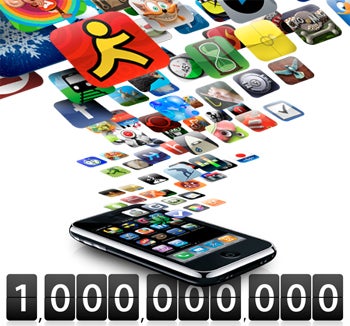
OK so in 9 months customers of Apple have downloaded 1 Billion Applications for the iPhone AND iPod Touch.
I look upon this not as a demonstration of the market for mobile data services but rather the demand for personalisation. As before with people buying ringtones and wallpaper owners of mass market consumer electronics wish to make them unique.
I am not an iPhone user but I am someone with a Touch. I have 20 applications that I use on my iPod and have removed 6 that didn't work. The average for each of my applications is 4 updates since I have installed them. Does Apple count these as 26 Apps or 90 something?
I understand that Game Theory is deployed by the Vendor of an App to keep it in the charts thus I expect that we are looking at Double Counting.
As a Touch user I can only connect via WiFi but as someone who works in an environment that such services is ubiquitous connectivity other than when in Transit is good. How many iPhone users are also doing so over WiFi rather than 2G/3G mobile? Thus the next time that someone tells me that Mobile Data is mainstream can they at first demonstrate that what they are doing is possible on a handset that is not Smart?
The next few months will be interesting in that the economic downturn means that the old subsidy model is over and so will smartphone numbers grow if the consumer has to pay up front for the handset? Without a Smartphone what of the market for Apps?
When I can get Opera on my Touch I will consider that Apple is Open and Mobile Data is more than niche.
Wednesday, March 11, 2009
So Just what are you developing for the App Store?
Terence Eden's presentation at MoMo London was interesting for the fact that he highlighted that the biggest selling handset in Europe last year was a Nokia 6300 and Globally it was also a Nokia 1100. Neither of the handsets are Smartphones however they are purchased by Networks to give to subscribers these handsets when compared to a Smartphone are positively basic.
Given that fact what should you be developing? Perhaps we need to look at using the assets of the Mobile Network to overcome the lack of power in the handset? Alternatively we could look at services rather than applications and look at partnering with Transit Systems and Banks to introduce ticketing and payment solutions?
What is going to stop you is the fact that success requires those within the Mobile industry to understand that it is an ecosystem. When we have an ecosystem then we can operate as a federation with a Thought Leader shaping requirements then Networks and Service Providers publishing Application Profile Interfaces that will open platforms to as many as possible. Whilst for those of us in the Mobile Industry this might seem a utopian dream and to Regulators sound lie a classic cartel, it has been done in the US with Mobile Banking.
A review of Mobile Banking in America will show that the Banks have invested millions in advertising the service in mainstream media, three of the four Networks have opened up there platforms. The result is that one in five phone owners have done some form of mobile banking in the last year. Over 200 companies have developed solutions for Banks. Wells Fargo has 28 different Mobile Banking solutions that range from simple text to complex java for Blackberry and iPhone. The usage of Mobile Banking is feed back to help understand the progression from simple transactions to peer-to-peer payments.
Having seen the Sandboxes set up by European Mobile Networks and Handset Vendors I fear that what is on offer is a range of islands rather than walled gardens. The problem is that the water between each island could be cold and have strong currents and the maps to navigate between them look like some from the dark ages rather than GPS satellite renderings.
Should I want to be a developer I would seek access to the HLR, I would want detailed APIs and microsegmention of the customer base with trends recorded over the last four to six quarters. I would want to be able to offer firmware updates to customers so that the handset is capable of operating at its optimum.
This is where the problem of any App Store makes them likely to fail. The Mobile Networks thanks to fragmentation in the legacy systems do not have the information I need and so any application launched is little more than a live experiment. If you own a Mobile Network and you want to use the intellect of others to service your Customers needs can you please invest in a Service Delivery Platform that covers the whole of your base and publish all of your Interfaces?
Monday, March 09, 2009
Economist view on MWC09

This weeks Economist has a review of the transformation of the mobile industry following Mobile World Congress. It points out the unlike other industries at present Mobile is in good health in terms of sales.
In telling us that we are at in inflection point with the transition of handsets into smartphones. Whilst this sector has grown over the last few years to be a key element I do not see that many consumers are looking for a single device. Talking to my daughters about what "upgrade" they want it is not about an iPhone or Blackberry for these teenagers but rather an exceptional camera that will also playback MP3s. Many have two handsets and whilst the Smartphone is the device that they are happy to show in public the "other" handset is the one that does most of the phone calls.
As the economy starts to slow further we will see Network Operators look more at the dead money spent on Subscriber Acquisition/Retention Costs. Why would a Network give out a £250+ handset if it is used as a second device and so the usage is lower than expected?
As money starts to be counted by the Consumer will we see Contracts downsized the current bundles are perceived as over priced rather than good value. This being the case we are seeing more PAYG sims becoming dormant whilst contract numbers stay strong thanks to the introduction of SIM only. The risk is that the Networks will become more intelligent and will take the opportunity to "lose" subscribers that are not profitable.
A presentation last year from NSN showed that on a number of European Networks over 60% of the subscribers were loss making. Will this downturn mean that the Operators with the best processes take the opportunity to decide that they do not seek to be mass market but rather premium supplier? If they decide that this is the best source of action then they could look at the PC market and say that the approach of Apple & Sony is far better than Dell & HP.
Photo is the Nokia E75 taken by me at MWC09.
Wednesday, February 25, 2009
The Rise of the App Store
Over the last three months more and more of those that I have met who are new to Mobile say that they have joined because the industry has gone "Open". They tell me that the App Store shows that the walled garden of the operators has finally been broken.
As someone who has been in the industry for over twenty years I have to inform then that the assumptions that they are working on are wrong. We have seen all this before. Not very long ago O2 had its Source developer community, they gave access to the O2 labs and test equipment for developers to use. Companies big and small whent to Ealing or Marlow to show that they had just the application that was going to monitise the mobile web. I did not see one single company that made money from the relationship. O2 started charging developers for access to the lab and then SourceO2 stopped.
Vodafone, T-Mobile and Orange all had Partner programs that were aimed at launching applications to the consumer all of these have been scaled back.
This week we have news from America that the App Store might be a bubble in that those who download do not use many Apps. This matters if your business model is ad supported. The Apple App Store needs to learn from the Palm developers, I will believe that it is open when I can download Opera for my iTouch o replace the iCal with something more suitable.
I do not see the use of App stores as something that will improve the user experience. I have persisted in try to make the Yahoo!Go service work on a number of handsets. On my latest Sony Ericsson it no longer connects to the server and so cannot update, it did for a while then it stopped. On my HTC Touch Plus the application works once in every five attempts! These two handsets are on different networks, I think the issue is that the network api has changes on my Orange handset, it might be an issue with memory on the handset with T-Mobile the issue is with the Radio Network I think. Poor quality of service means that regardless of excellent design an App will become unloved and unused.
Subscribe to:
Posts (Atom)


.jpg)